Apgujeong & Sinsa: Korea's Clinic District Guide
The Apgujeong–Sinsa area of Gangnam, Seoul is the densest cluster of plastic surgery and dermatology clinics in Korea, centred on Apgujeong Rodeo and Sinsa stations. For a recovering patient it is walkable and well-served by pharmacies, soft-food cafes, and short taxi hops — but clinic concentration is a convenience, not a vetting signal. We verify clinics individually regardless of address.
As your registered concierge, Seoul Medical Insider arranges and accompanies your care at no cost to you — patients pay us nothing.
This page is a neighbourhood orientation, not a clinic recommendation. We wrote it so that, whether you book through us or not, you understand the ground you'll be walking on while you recover.
What the Apgujeong–Sinsa district actually is
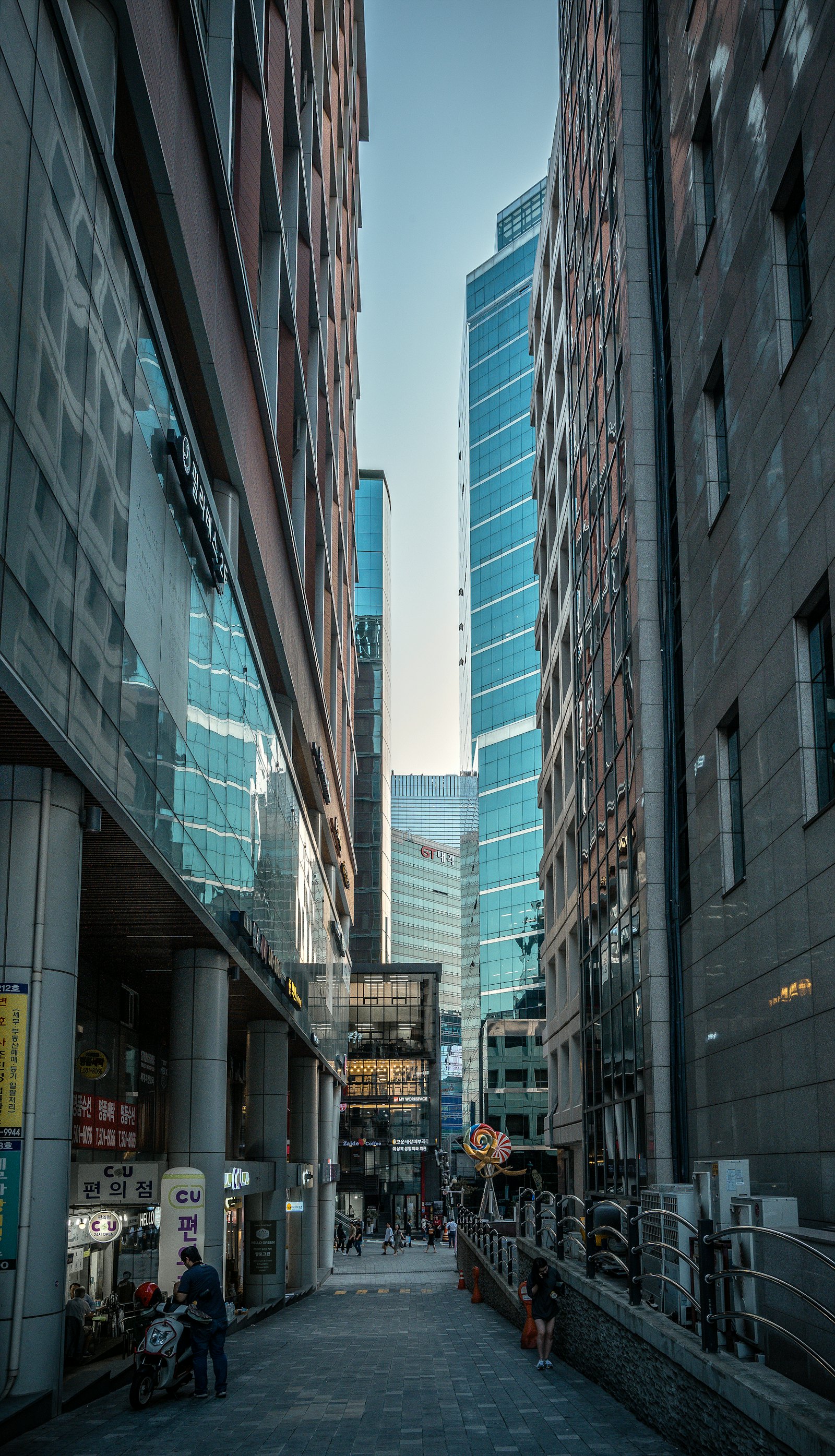
The Apgujeong–Sinsa district is a roughly one-square-kilometre stretch of northern Gangnam. Hundreds of cosmetic surgery, dermatology, and dental clinics sit within a few blocks of each other.
It runs broadly from Apgujeong Rodeo in the east, along the Garosu-gil tree-lined street in Sinsa-dong, down toward Sinsa station. The clinics are stacked vertically inside mid-rise commercial buildings — it is normal to find four or five different practices in a single elevator bank, alongside cafes, pharmacies, and clothing stores.
This is a commercial and fashion district first, and a medical one second. That matters for a patient: you are not recovering in a quiet hospital campus but in a busy, social part of the city.
- The upside: everything you need — food, a chemist, a quiet cafe, a taxi — is within a short, slow walk.
- The downside: crowds, especially on weekends along Garosu-gil and Apgujeong Rodeo.
How to get there: Apgujeong Rodeo and Sinsa stations
The district is anchored by two subway stations, and most clinics sit within a 5–12 minute walk of one of them.
- Apgujeong Rodeo station (Suin–Bundang Line) serves the eastern, Apgujeong-dong side.
- Sinsa station (Line 3 and the Shinbundang Line) serves the western, Garosu-gil side.
- Apgujeong station (Line 3) sits slightly further west and also feeds the area.
From Incheon Airport, the practical route is the Airport Railroad (AREX) to a transfer, or a direct airport limousine bus toward Gangnam. Both take roughly 70–90 minutes depending on traffic.
After surgery, most patients do not ride the subway for the first several days. Short metered taxis or a pre-arranged car between your accommodation and the clinic are gentler on swelling, drains, and dizziness. Taxis are plentiful here and the rides are short — accommodation in Gangnam is usually 5–15 minutes from the clinics.
If you're booking your stay around this area, our companion guide on staying in Gangnam for surgery covers accommodation, walkability, and what to keep within reach during recovery.
Why so many clinics concentrate here
Clinics cluster in Apgujeong–Sinsa for ordinary commercial reasons, not because the area is medically certified. Three forces drive it:
- Reputation and clustering economics. Apgujeong has been associated with cosmetic medicine for decades. Once a district becomes known for something, new clinics open there to be near the patient flow, suppliers, and trained staff — a self-reinforcing loop that has little to do with any individual clinic's quality.
- Affluent, image-conscious catchment. Northern Gangnam is one of Seoul's wealthiest areas, with strong domestic demand for aesthetic procedures. The international patient market layered on top of that existing demand.
- Infrastructure. Mid-rise commercial buildings, transit, hotels, and a dense web of suppliers (implants, lasers, lab work) make it cheap and fast to run a clinic here.
None of those reasons is a measure of safety or skill. A clinic two floors above a famous one can have a completely different surgeon, equipment standard, and complication record.
What surrounds you while you recover
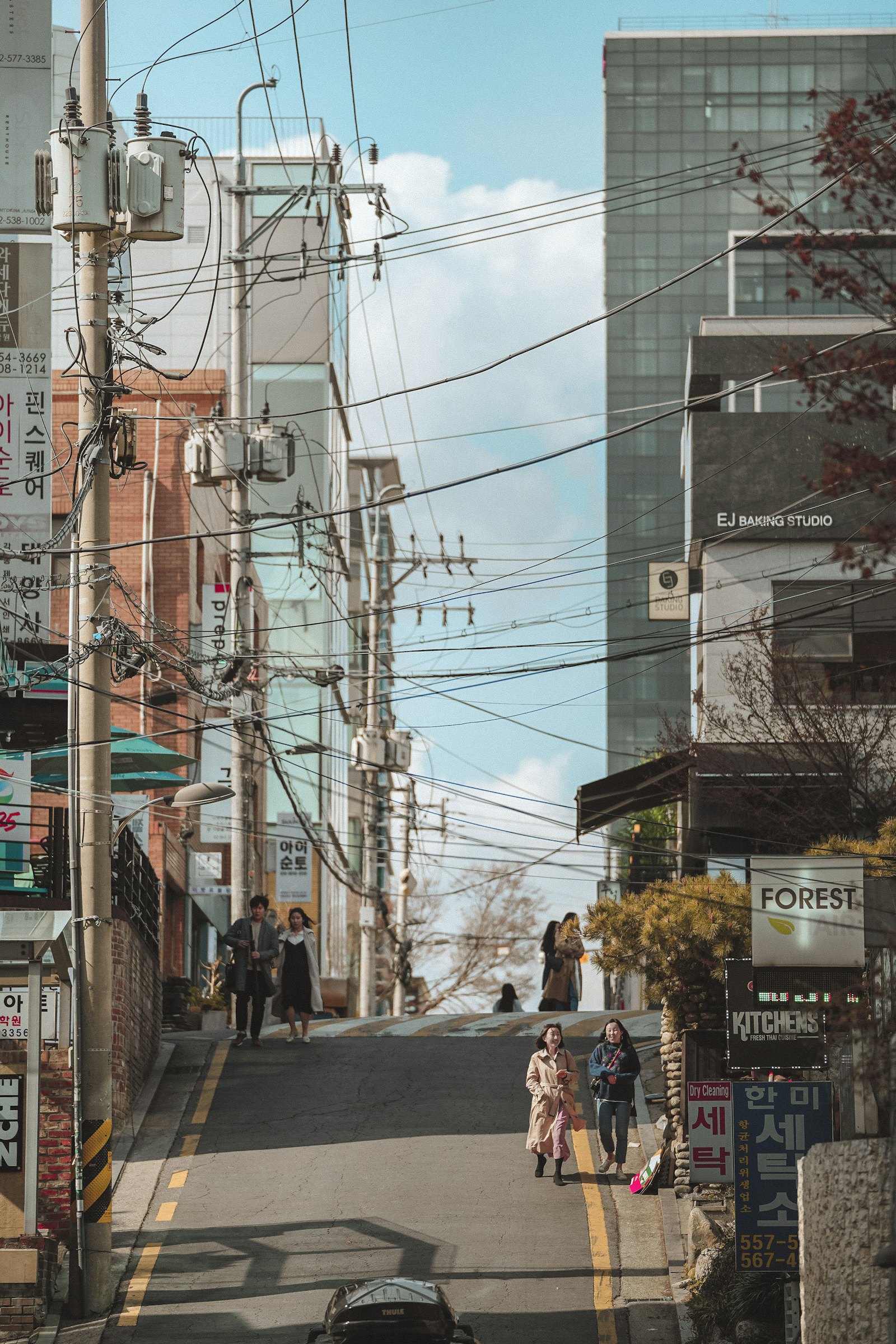
The practical comfort of recovering here comes from what sits between the clinics. Within the same few blocks you will typically find:
- Pharmacies (약국, yakguk). Easy to find near clinic buildings and subway exits, usually marked with a green cross. Bring your prescription and any documentation; staff in this district often have some English, though it isn't guaranteed. Many clinics dispense or point you to a specific nearby pharmacy.
- Soft-food and recovery-friendly eating. The district is full of cafes and restaurants. After jaw, nose, or facial work, you'll want soft, low-chew options — porridge (juk), soups, smoothies, and convenience-store soft foods are all easy to source nearby. Cold drinks and ice are easy to find for swelling.
- Convenience stores (CU, GS25, 7-Eleven) on most corners, open late, for water, soft snacks, basic supplies, and cash withdrawal.
- Quiet cafes for the in-between hours on review-day visits, when you need to wait near the clinic but not stand around.
- Garosu-gil and Apgujeong Rodeo shopping — pleasant for a slow, gentle walk once your surgeon clears light activity, though crowds and sun aren't ideal in the first swollen days.
A realistic recovery rhythm here: rest at your accommodation, take short taxi or slow-walk trips to the clinic for check-ups, and use the nearby pharmacy and food options rather than long outings. Sun, alcohol, saunas, and crowds all wait until your surgeon says otherwise.
Concentration is not a vetting shortcut
The single most important thing to take from this page: being in Apgujeong does not make a clinic safe, and being elsewhere does not make one worse.
The district's density is a marketing and convenience fact, not a quality filter. Inside the same building you can find an internationally experienced board-certified surgeon and a thinly-staffed operation that outsources to visiting doctors.
This is exactly why we verify each clinic and surgeon individually — specialty board credentials, who actually performs your operation (not just who you consult with), facility and anaesthesia standards, and complication handling — independent of how prestigious the postcode sounds.
Our process for that is described in our surgeon identity verification guide. If you want the wider geography and how Apgujeong fits the rest of the surgical map, see our overview of plastic surgery in Gangnam, Seoul.
Key facts
- Where: Apgujeong-dong and Sinsa-dong, northern Gangnam-gu, Seoul.
- Main stations: Apgujeong Rodeo (Suin–Bundang Line) and Sinsa (Line 3 and Shinbundang Line); Apgujeong station (Line 3) nearby.
- Character: dense commercial/fashion district with clinics stacked in mid-rise buildings — not a hospital campus.
- Recovery basics nearby: pharmacies, soft-food cafes, convenience stores, plentiful short taxis.
- Key caveat: clinic density is convenience, not certification. Vet clinics individually.
Plan your stay around the district
If you're mapping out where to base yourself, read our guide on staying in Gangnam for surgery for accommodation and recovery logistics, and our overview of plastic surgery in Gangnam, Seoul for the wider picture of where care happens.
When you're ready, book a free consultation and we'll match the right clinic to your procedure — verified individually, never chosen by postcode — and walk the district with you.
Sources & last updated — June 2026
- Sinsa station — Seoul Subway Line 3 and Shinbundang Line (Wikipedia, "Sinsa station"; line assignments verified June 2026).
- Apgujeong Rodeo station — Suin–Bundang Line (Wikipedia, "Apgujeongrodeo station"; verified June 2026).
- Apgujeong station — Seoul Subway Line 3 (Seoul Metropolitan Subway / Seoul Metro station references).
- Korea Tourism Organization area descriptions of Apgujeong-dong, Sinsa-dong, and Garosu-gil.
- Seoul Medical Insider concierge process documentation (clinic and surgeon verification, recovery logistics).
Honest limits: This is a neighbourhood orientation, not a medical or clinic recommendation. Transit lines, exits, and nearby businesses change; confirm current details before you travel. We do not list or endorse specific clinics by location, and presence in Apgujeong is not evidence of quality or safety. Recovery timelines and what you can safely do in the district depend entirely on your procedure and your surgeon's instructions — there are no guaranteed outcomes or timelines.
Questions
Frequently asked questions
Start here
Your consultation, with people who answer.
Tell us what you’re considering. An English-speaking coordinator replies within 24 hours — no fee, no pressure.
- MOHW-registered · A-2025-01-01-06547
- Reply within 24 hours
- $0 concierge fee
- No obligation
