
Korean Skin Boosters Explained: Rejuran, the Chanel Injection, Juvelook and More
A plain-English, hype-free guide to Korea's most-searched skin boosters — what Rejuran, the Chanel injection (NCTF), Juvelook and exosomes actually are, their generic names, sessions and downtime, and the regulatory status to check.
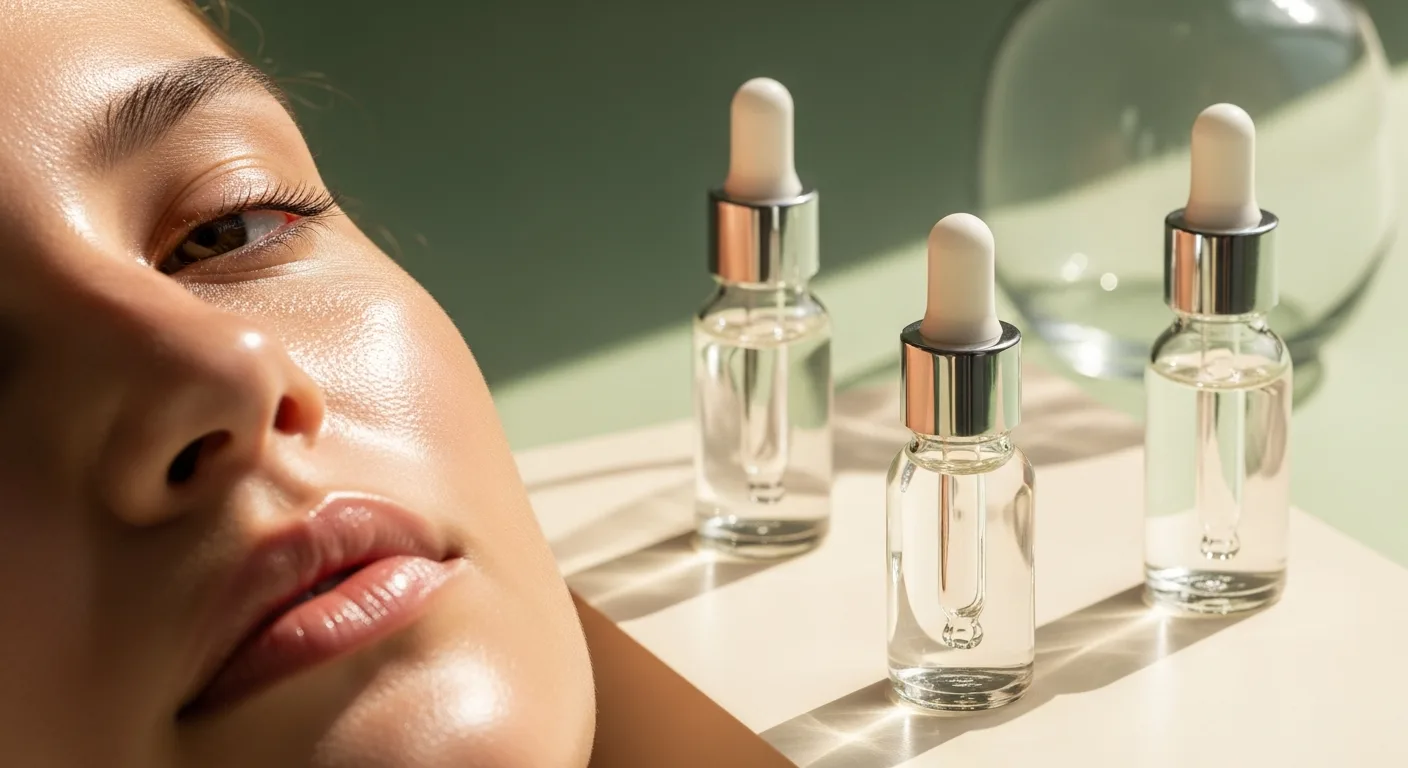
Korea is the global shop window for "skin boosters" — injectables marketed to improve skin quality (hydration, texture, firmness) rather than to add obvious volume. The names travel faster than the facts: Rejuran, the "Chanel injection," Juvelook, exosomes. This guide is the plain-English, hype-free version: what each one actually is in generic terms, how sessions and downtime work, and — importantly — the regulatory status you should check before assuming it's available or approved where you live.
What this guide covers — and what it doesn't. This page is about injectable skin boosters. For energy-based tightening (RF/ultrasound), see Thermage vs Ultherapy. For pigmentation and melasma, see melasma treatment in Korea.
First: what a "skin booster" is
Unlike a filler (which adds volume) or a wrinkle relaxer, a skin booster is injected to improve the skin itself — marketed for hydration, texture, elasticity, and overall "glass skin" quality. They are typically delivered as a short course of sessions with periodic maintenance, not a single treatment. Results are gradual and vary by person; treat dramatic before-and-after marketing with caution.
The names, in generic terms
Brand nicknames hide what's actually being injected. Here's the translation:
- Rejuran → polynucleotide (PN / PDRN). A salmon-DNA-derived injectable marketed to improve skin quality and healing.
- "Chanel injection" → NCTF (a mesotherapy cocktail). A nickname, not a brand — usually a multi-ingredient skin-conditioning solution. The luxury nickname says nothing about what's inside; ask for the actual product.
- Juvelook → PDLLA (poly-D,L-lactic acid) + HA. Marketed for skin quality and mild collagen stimulation.
- Exosomes → cell-derived preparations marketed for regeneration, often paired with lasers or microneedling.
- (For contrast) HA microdroplet boosters such as Skinvive are hyaluronic-acid based; Skinvive is notable as an FDA-approved skin booster, unlike most of the above.
Knowing the generic name lets you research the real evidence and regulatory status — rather than the marketing.
★ Regulatory status: read this before you book
This is the part marketing skips, and it matters most for international patients:
- Korea (MFDS): products like Rejuran are approved by Korea's regulator and widely used.
- United States (FDA): polynucleotide injectables (Rejuran), Juvelook, NCTF, and exosome injectables are not FDA-approved as injectables. In the US context, some of these have been associated with topical use only, and exosome injectables in particular have drawn FDA caution. This doesn't mean they're unsafe in Korea — it means approval differs by country.
- Singapore (HSA) and elsewhere: approval and availability vary; check your own country's regulator (e.g., HSA in Singapore) rather than assuming.
- Always verify the current status — regulatory positions change, and some manufacturers may pursue approval over time.
The practical takeaway: a treatment can be perfectly legal and common in Korea while being unapproved as an injectable at home. Know that going in, and ask exactly what is being injected.
Sessions, downtime, and cost
- Sessions. Most boosters are a short course (commonly a few sessions weeks apart) plus maintenance — not one-and-done.
- Downtime. Usually minimal — tiny injection marks, occasional bruising — but it varies by product and person.
- Cost. Priced per session and per product, so it's a per-case quote. Because it's a recurring treatment, budget for the course and maintenance, not a single visit. (See the all-in cost guide for how to budget recurring treatments.)
Evidence and realistic expectations
Skin boosters are marketed hard, so calibrate expectations honestly:
- They aim for gradual improvements in skin quality — hydration, texture, a "glow" — not dramatic, filler-like change.
- Evidence varies by product. Some ingredients have more published support than others; newer products and exosomes have less long-term data. "Popular in Korea" is not the same as "proven."
- Results are temporary and cumulative — a course plus maintenance, not a permanent fix.
- Be skeptical of dramatic before-and-after marketing; individual response varies widely.
Who should be cautious
Suitability is individual and decided by a qualified clinician, but in general, take extra care if you:
- Are pregnant or breastfeeding.
- Have a history of strong reactions, keloids, or autoimmune conditions.
- Have an active skin infection or inflammation in the area.
- Have allergies relevant to the product (for example, fish-derived ingredients in polynucleotide products).
The right move is a proper consultation where you disclose your history and ask what's actually being injected, whether it's approved where you live, and what the realistic outcome is.
How to choose safely
- Ask for the exact product and its generic ingredient — not just a nickname.
- Confirm whether it's approved by the relevant authority for the use proposed.
- Confirm who injects it and their qualifications.
- Be skeptical of guaranteed-result or "miracle" claims; evidence varies by product.
Want help understanding which booster (if any) fits your skin, and what's approved where you live? Start a consultation. We're a government-registered facilitator (MOHW A-2025-01-01-06547); you pay $0 with no markup, and we'll give you the un-hyped version.
Disclaimer: Seoul Medical Insider provides coordination, interpretation, and concierge services and is a government-registered medical tourism facilitator (registration A-2025-01-01-06547). We are not a hospital and do not provide medical advice. Product suitability, results, and risks vary and are determined by your treating clinician. Regulatory status differs by country and changes over time; verify current approvals (FDA, HSA, MFDS, etc.) for your situation before treatment.
Clinical details are summarized from materials provided by SMI's partner clinics and published guidance from the Korean Society of Plastic and Reconstructive Surgeons (KSPRS). Technique selection is determined by your surgeon during consultation. SMI is a registered patient-facilitation agency, not a medical provider, and does not offer medical advice.
Frequently asked questions
Sources
- Ministry of Health and Welfare, Republic of Korea
- Medical Korea (KHIDI)
- Korea Health Industry Development Institute (KHIDI)
- Korean Society of Plastic and Reconstructive Surgeons (KSPRS)
Read our editorial policy to learn how we source and verify information.
