Plastic Surgery in Gangnam, Seoul: District Guide
A registered medical-travel concierge's guide to where Korea's clinics actually are — and why the neighborhood matters less than you'd think.
Gangnam, in southern Seoul, holds the densest cluster of plastic-surgery clinics in Korea, concentrated in the Apgujeong, Sinsa-dong, and Gangnam Station areas. But a Gangnam address alone tells you nothing about a surgeon's qualifications. The district matters for logistics and convenience; the specific surgeon and clinic you choose matter for your result. We help you tell the two apart.
If you have started researching surgery in Korea, you have already met the word "Gangnam." It appears in clinic names, in marketing, and in nearly every travel guide.
This page explains what the district actually is, how it is laid out, how to move around it, and — most importantly — why "in Gangnam" is a postal fact, not a quality signal.
We are Seoul Medical Insider, a registered medical-travel concierge, and our patients pay us nothing. Our job is to make this district legible to you and to vet the surgeon behind the address.
Key facts
- Gangnam-gu is a district ("gu") in southern Seoul; the plastic-surgery cluster sits mostly in its northern part.
- The three sub-areas patients hear most: Apgujeong / Apgujeong Rodeo, Sinsa-dong, and Gangnam Station.
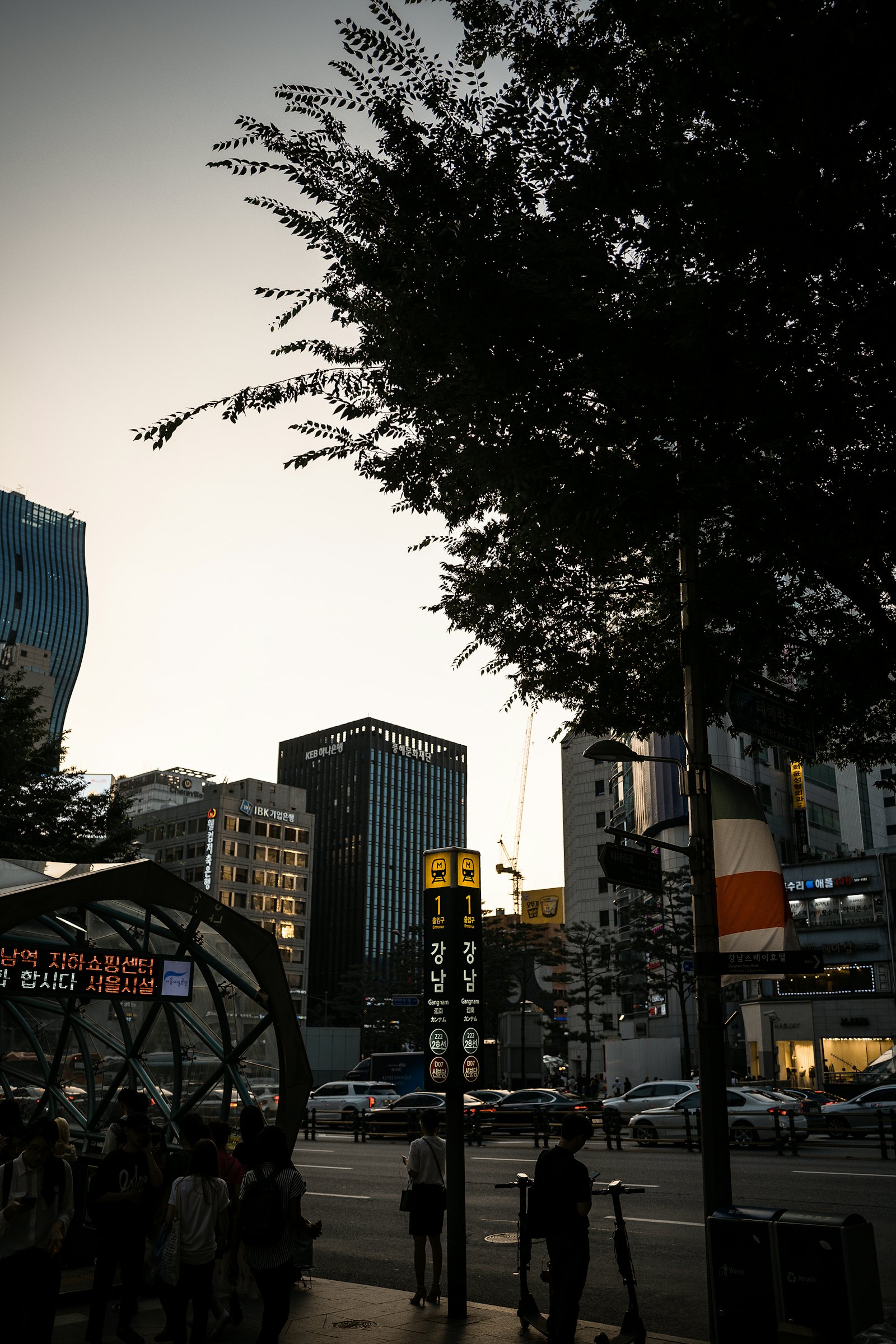
- Subway is the practical way to get around — Lines 2, 3, 9, the Shinbundang Line, and the Suin–Bundang Line all touch the district.
- A Gangnam address is not a credential. Vetting the surgeon is what protects you. See how we verify a surgeon's identity and how our agency process works.
- We provide on-the-ground, English-speaking support so you are never navigating clinics, appointments, or follow-ups alone.
What "Gangnam" actually means
Gangnam is a real administrative district of Seoul, not a brand. The word means "south of the river" — it sits below the Han River — and it grew into Seoul's wealthiest commercial area through the 1990s and 2000s.
Clinics concentrated there for ordinary commercial reasons: high foot traffic, premium retail, and proximity to the affluent residents who were early domestic patients. Over time the density itself became self-reinforcing, and "Gangnam" became shorthand for Korean plastic surgery worldwide.
That history matters because it explains why the address is geographic, not qualitative. Clinics did not earn a Gangnam location by being better; they located there because that is where the market was.
The result: excellent surgeons practice in Gangnam — and so do unremarkable ones, in the same buildings, on the same streets.
The district map
Three sub-areas account for most of the clinics international patients visit. They are close together — a short subway ride or a brisk walk apart — but each has a slightly different character.
| Sub-area | Where it is | Character | Nearest stations |
|---|---|---|---|
| Apgujeong / Apgujeong Rodeo | North Gangnam, near the river | The classic, longest-established cluster; "Medical Street" runs here | Apgujeong (Line 3), Apgujeongrodeo (Suin–Bundang Line) |
| Sinsa-dong | West of Apgujeong, around Garosu-gil | Boutique clinics mixed with cafés and shopping | Sinsa (Line 3 and Shinbundang Line) |
| Gangnam Station area | South, around the main interchange | High-traffic, high-rise clinics; busiest streets | Gangnam (Line 2, Shinbundang), Sinnonhyeon (Line 9, Shinbundang) |
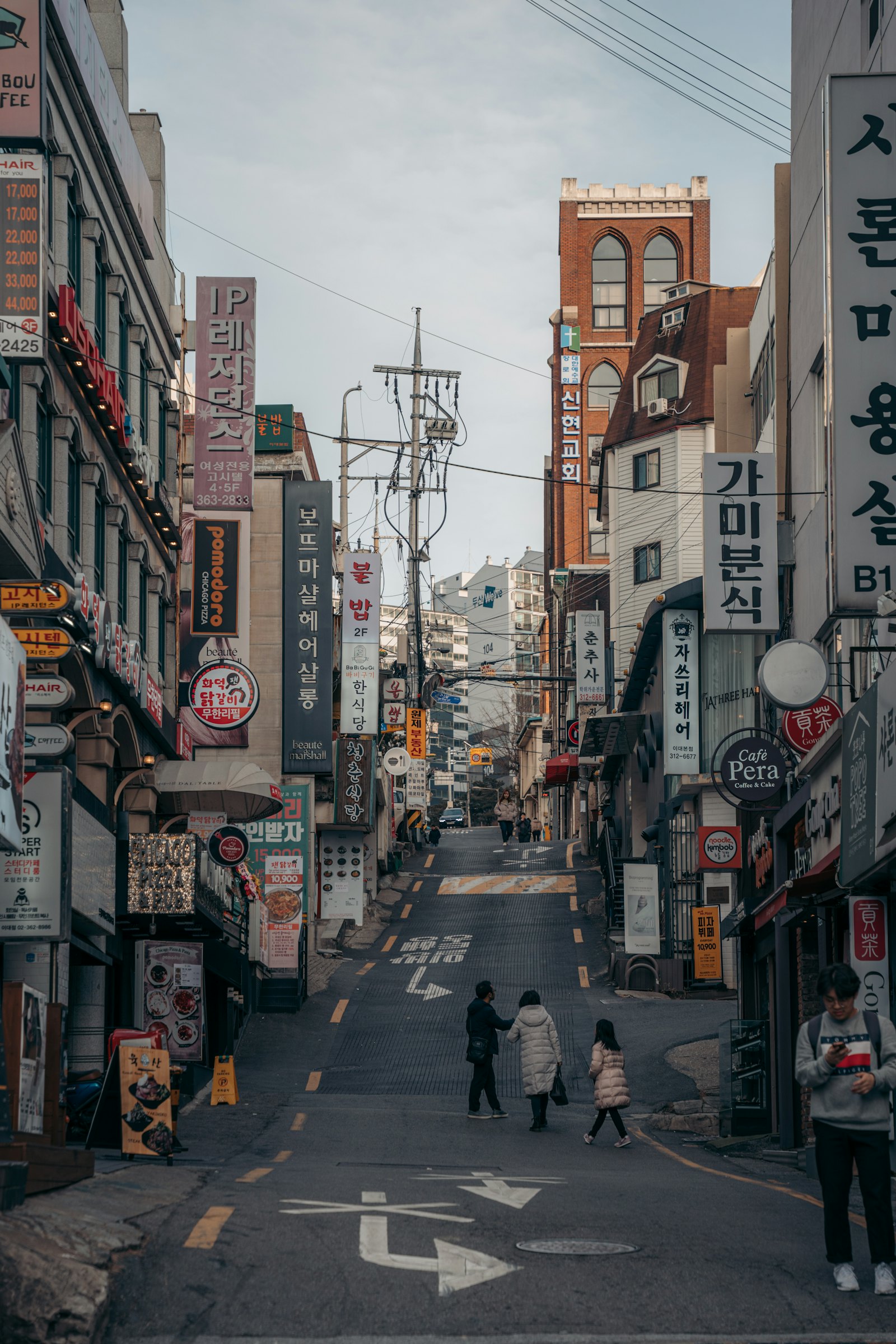
Apgujeong and Apgujeong Rodeo form the historic heart. A stretch sometimes called "Medical Street" runs through here, with clinics stacked floor over floor in the same towers. If you have seen photos of a Seoul building covered in clinic signage, it was probably shot here.
Sinsa-dong, just to the west, blends into Garosu-gil — a tree-lined shopping street — and tends toward smaller, boutique practices.
The Gangnam Station area, further south around the city's busiest subway interchange, is the most commercial and crowded, with large clinics occupying entire upper floors of office towers.
We cover the historic core in more depth on our Apgujeong plastic surgery district page.
Why "Gangnam" alone does not mean "better"
A Gangnam address is not a quality signal. This is the single most important thing on this page.
Two clinics on the same block — even in the same building — can differ enormously in the qualifications of the operating surgeon, the safety of their anesthesia setup, and whether the doctor who consults with you is the one who actually operates. The neighborhood is constant; none of those things are.
Several risks hide behind the prestige of the address:
- The "shadow doctor" problem. In some clinics, the surgeon a patient meets at consultation is not the one who performs the operation. A Gangnam address does nothing to prevent this. Verifying who will hold the scalpel does. See how we verify surgeon identity in Korea.
- Marketing density, not quality density. The streets with the most signage are not the streets with the best outcomes — they are the streets with the highest rents and the most advertising spend.
- Board certification varies. Practicing in Gangnam does not require a surgeon to be a board-certified plastic surgeon. The credential has to be checked, name by name.
This is why our process is built around the surgeon and the clinic, not the neighborhood. We confirm board certification, match the consulting doctor to the operating doctor, and review the facility's safety setup before we recommend anyone.
The full method is described in our medical-travel agency process. Treat the address as a starting point for logistics — and treat the surgeon as the thing that actually determines your result.
Getting around the district
Gangnam is best navigated by subway. Driving is slow and parking is scarce; the metro is fast, signed in English, and reaches every sub-area.
The lines that matter:
- Line 3 (orange) — serves Apgujeong and Sinsa, the two stations closest to the historic cluster.
- Line 2 (green) — stops at Gangnam Station, the southern hub.
- Line 9 (gold) — serves Sinnonhyeon, near the Gangnam Station area.
- Shinbundang Line — a fast express line linking Sinsa, Sinnonhyeon, and Gangnam.
- Suin–Bundang Line — serves Apgujeongrodeo Station, on the eastern edge of the cluster.
A few practical notes:
- Mind the exit number. Stations have multiple numbered exits, and clinics almost always give directions as "Exit 4, then two minutes on foot" — so the exit number matters as much as the station.
- Carry a T-money card. This reloadable card, sold at any convenience store and station machine, works on every line and on buses and most taxis.
- Use taxis after surgery. They are inexpensive by international standards and useful when you should not be navigating stairs and crowds. We arrange these for our patients so you are not standing on a curb with bandages explaining an address in a second language.
Staying near your clinic
For most procedures, staying within the district — close to your clinic — makes recovery far easier. You will have multiple follow-up visits in the days after surgery (suture checks, dressing changes, swelling reviews), and a short, low-stress trip to each one matters when you are sore and tired.
Accommodation in Apgujeong, Sinsa, and around Gangnam Station ranges from full-service hotels to serviced residences with kitchens, which many patients prefer for longer recoveries.
We go into options, neighborhoods, and what to look for in a recovery stay on our dedicated page: staying in Gangnam for surgery. For how long you should actually plan to be in Korea, see our recovery and stay-length guide.
Our on-the-ground support
Knowing the district map is the easy part; using it after surgery, in a second language, is the hard part. That is where a registered concierge earns its keep — and where ours costs you nothing.
For our patients in Gangnam we provide:
- English-speaking coordination at consultations and follow-ups, so nothing is lost in translation.
- Appointment and transport logistics between your stay and the clinic.
- A single point of contact through your whole trip, from arrival to final follow-up before you fly home.
- Aftercare continuity once you are back home — see aftercare for international patients.
We are a registered medical-travel agency, and patients pay us nothing — we do not add markups to your treatment and we do not take a fee from you. Our role is to make the district navigable and the surgeon verifiable.
To see how the whole journey works, read how it works, and when you are ready, book a consultation.
How to choose within Gangnam: a short method
A neighborhood does not vet a surgeon — you do, or we do it with you. Here is the order of operations we use, condensed.
- Start with the procedure, not the place. Decide what you want done and which sub-specialty it requires. Browse our procedures hub and the foreigner-focused guide to surgery in Korea.
- Verify the surgeon's board certification by name. A clinic's location is irrelevant if the operating doctor is not properly certified for your procedure.
- Confirm who operates. Make sure the doctor who consults with you is the doctor who will perform the surgery — our surgeon identity verification step exists for exactly this.
- Check the facility, not the signage. Anesthesia setup, emergency protocols, and accreditation matter more than how many floors of the building the clinic occupies. See how this fits into our agency process.
- Then think about logistics — which sub-area, where to stay, how to get to follow-ups. That is what this district guide is for.
A note on cost and the district
Being "in Gangnam" does not set a fixed price, and a higher rent address does not guarantee a better outcome.
As a general 2026 orientation only — not a quote and not a solicitation — published third-party market ranges for common procedures in Korea span widely. For example:
- Double-eyelid surgery is commonly cited around USD 2,700–3,850.
- Rhinoplasty is commonly cited around USD 4,260–7,200.
Actual figures depend on your individual case and the specific clinic, and any clinic quote should come directly from that clinic after assessment.
For how pricing works for international patients, see our plastic surgery in Korea cost guide. Note that Korea's foreigner medical-VAT refund scheme changed for 2026; we cover the current state of tax and refunds in that cost guide rather than repeating outdated figures here.
Honest limits
This is a district and logistics guide, not medical advice and not an endorsement of any specific clinic or surgeon. We cannot and do not promise any surgical outcome — no agency or surgeon ethically can.
The right procedure, surgeon, and plan depend entirely on your individual anatomy, health, and goals, and can only be determined through proper consultation.
Geographic information about the district can change as the city and its transit evolve; treat station and line details as a planning aid and confirm current routes before you travel.
Sources & last updated — June 2026
- Seoul Metropolitan Subway line and station data — Wikipedia: Sinsa station (Line 3 and Shinbundang Line), Apgujeongrodeo station (Suin–Bundang Line), Sinnonhyeon station (Line 9 and Shinbundang Line), Gangnam station (Line 2), and Shinbundang Line.
- District geography and sub-area characteristics — primary public-transit and area references for Gangnam-gu, Seoul.
- Cost ranges are third-party 2026 market orientation figures, not clinic quotes.
Questions
Frequently asked questions
Start here
Your consultation, with people who answer.
Tell us what you’re considering. An English-speaking coordinator replies within 24 hours — no fee, no pressure.
- MOHW-registered · A-2025-01-01-06547
- Reply within 24 hours
- $0 concierge fee
- No obligation
