
Procedure guide
Botox in Korea
- Surgery time Around 10 – 20 minutes
- Anesthesia type Not required
- Hospitalization Not required
- Face wash & makeup Same day
- Post-surgery check-up Not required
- Stitches removal Not required



Botox — the brand name for botulinum toxin type A — is the world's most popular non-surgical aesthetic treatment. It works by temporarily relaxing targeted muscles, smoothing dynamic wrinkles (those caused by facial movement) and, in Korea's distinctive aesthetic approach, slimming the face and calves by reducing muscle bulk over time. Korean clinics use Botox and KFDA-approved alternatives such as Meditoxin (Neuronox), Nabota (Jeuveau), and Letibonum with extensive experience and competitive pricing.
Beyond anti-wrinkle treatment, Korean practitioners routinely use botulinum toxin for jaw reduction (masseter slimming), calf slimming, hyperhidrosis (excessive sweating), gummy-smile correction, neckband softening (platysma bands), and "skin Botox" — a micro-injection technique across the face for pore reduction and a subtle lifting effect. This breadth of application means practitioners in Seoul encounter a much wider range of treatment scenarios than in most other countries.
| Treatment time | 10 – 20 minutes |
| Anaesthesia | None required (ice or topical numbing cream optional) |
| Hospital stay | None — walk-in, walk-out |
| Back to routine | Immediately |
| Final result | 7 – 14 days (wrinkles); 4 – 8 weeks (jaw/calf slimming) |
This page is for general information only and does not replace a medical consultation. Results depend on the treatment area, dosage, individual muscle strength, and metabolism. Botulinum toxin effects are temporary and require maintenance treatments.
How it works
Botox treatment is quick and straightforward, but precision in dosing and placement is what determines a natural-looking result. Here is what a typical session involves.
- Consultation & assessment — The practitioner evaluates your facial expressions, muscle activity, skin quality, and areas of concern. You will be asked to frown, raise your eyebrows, squint, and smile so the practitioner can see exactly which muscles are driving the wrinkles or contributing to facial width. Treatment areas and unit counts are planned.
- Preparation — The skin is cleansed with antiseptic. Ice or a topical numbing cream may be applied for comfort, though many patients find Botox injections tolerable without anaesthesia due to the very fine needles used.
- Injection — Using a fine-gauge needle, small doses of botulinum toxin are injected into specific points within the target muscles. Common areas include the glabella (frown lines), forehead, crow's feet, masseter (jaw muscle), and — for body treatments — the gastrocnemius (calf). The practitioner controls the depth, angle, and volume at each point to ensure even distribution.
- Post-treatment guidance — You are advised to remain upright for 4 hours, avoid rubbing the treated areas, and skip intense exercise, saunas, and alcohol for 24 hours. No other downtime is needed.
- Follow-up — A review at 2 weeks is recommended, especially for first-time patients, to assess the result and add a small top-up if any asymmetry or residual movement is noted.
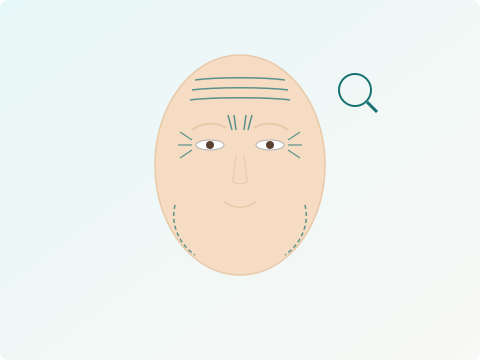
Muscle assessment
The practitioner identifies the target muscles by asking the patient to make facial expressions. Injection points are marked on the skin for precise dosing.
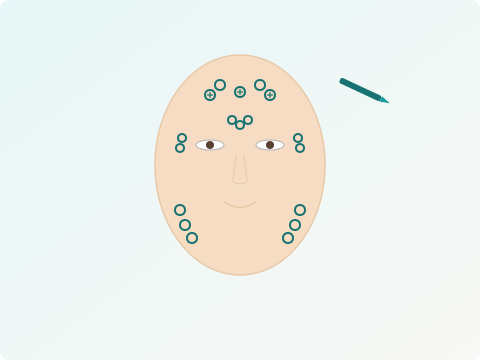
Micro-injections
Using a very fine needle, small doses of botulinum toxin are injected into the targeted muscles. The entire process takes 10-20 minutes with minimal discomfort.
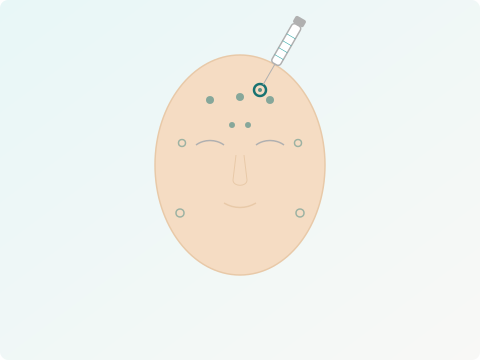
Post-injection care
Patients avoid lying down or rubbing the treated areas for 4 hours. No bandaging or downtime is required; normal activities can resume immediately.
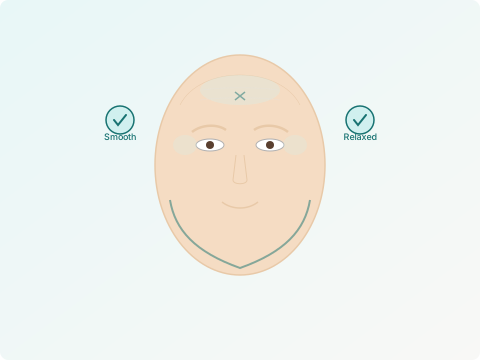
Gradual onset of effect
Results appear within 3-7 days as the toxin blocks nerve signals to the muscles. Full effect is reached at 2 weeks and lasts 3-6 months.
Cost · as of 2026
Through Seoul Medical Insider, Botox pricing is quoted transparently — either per unit or per treatment area, with no hidden consultation fees or surcharges. Your quote covers the product, injection, and a two-week follow-up review if needed.
The cost depends on the brand of botulinum toxin used (original Botox by Allergan is typically the most expensive, while Korean-manufactured alternatives like Nabota and Meditoxin offer comparable results at a lower price point), the number of units required (a forehead treatment may use 10 – 20 units, while jaw reduction may use 40 – 60 units per side), and the number of areas treated in one session. Many patients combine multiple areas — for example, forehead, crow's feet, and jaw — which offers better per-area value.
Pricing information is reviewed and updated as of 2026. Contact Seoul Medical Insider for a personalised quote based on your treatment goals.
Who it is for
Botox is one of the most widely applicable aesthetic treatments, but understanding its scope and limitations helps set realistic expectations.
- Suited: Patients with moderate to deep dynamic wrinkles — forehead lines, frown lines, and crow's feet — who want a smoother, more rested appearance without surgery.
- Suited: Individuals with a wide or square jawline caused by masseter muscle hypertrophy who want a slimmer, more V-shaped facial contour. This is one of the most popular Botox applications in Korea.
- Suited: Patients who suffer from excessive sweating (hyperhidrosis) in the underarms, palms, or forehead.
- Suited: Those who want to prevent wrinkle formation — "preventive Botox" in the late 20s to early 30s can slow the development of deep static lines.
- Discuss carefully: Patients with neuromuscular disorders (e.g., myasthenia gravis, Lambert-Eaton syndrome) — botulinum toxin is generally contraindicated.
- Discuss carefully: Pregnant or breastfeeding women — Botox is not recommended during pregnancy or lactation as a precaution.
- Discuss carefully: Patients with deep static wrinkles (lines visible even at rest) — Botox alone may not erase these; a combination with dermal fillers or skin resurfacing may be more effective.
Recovery
- Day 1: Tiny needle marks may be visible at injection sites; these fade within hours. Mild redness is normal. There is no pain after the procedure. Avoid lying down for 4 hours, do not rub or massage the treated areas, and skip vigorous exercise, hot baths, saunas, and alcohol for 24 hours.
- Days 2 – 4: The toxin begins to take effect. You may notice a gradual reduction in muscle movement in the treated areas. Forehead and frown-line patients often see initial smoothing by day 3 – 4. No visible signs of treatment remain at this stage.
- Days 7 – 14: The full wrinkle-smoothing effect is established. For jaw reduction, the slimming effect is not yet visible — the masseter muscle takes several weeks to shrink. A follow-up visit can be scheduled at this point to assess the result and add a top-up if needed.
- Weeks 4 – 8 (jaw and calf slimming): Muscle bulk reduction becomes visible as the masseter or calf muscles atrophy from reduced use. The slimming effect peaks around 6 – 8 weeks and is maintained with repeat treatments every 4 – 6 months.
Botox requires virtually no downtime. You can have the treatment done at any point during your stay in Korea and continue sightseeing the same day. If you are combining Botox with other treatments (fillers, lasers), your practitioner will advise on the optimal sequencing. A follow-up at 2 weeks is ideal but can be done via photo consultation remotely if you have already returned home.
Risks & considerations
Botox is one of the most extensively studied aesthetic treatments and has an excellent safety profile when administered by a trained practitioner. Possible side effects include temporary bruising at injection sites, mild headache on the day of treatment, a feeling of heaviness in the forehead (usually resolves as you adjust to reduced muscle movement), asymmetry if one side responds more strongly than the other (correctable with a small top-up), ptosis (drooping of the eyelid or brow) if the toxin migrates to adjacent muscles — this is temporary and resolves as the effect wears off over weeks, excessive weakening of the treated muscle leading to an unnatural frozen appearance (dose-dependent and avoidable with conservative dosing), difficulty chewing tough foods after masseter Botox (temporary and typically mild), and — very rarely — allergic reaction to the botulinum toxin product. Serious systemic effects from aesthetic-dose Botox are extremely uncommon.
Korea trip checklist
- Avoid blood-thinning medications and supplements (aspirin, ibuprofen, fish oil, vitamin E) for 5 – 7 days before treatment to reduce bruising risk.
- Arrive at the clinic with a clean face — remove all makeup and skincare products from the treatment area.
- If you are receiving jaw-slimming Botox, take a "before" photo with your jaw clenched so you can compare with the result at 6 – 8 weeks.
- Note the brand and batch number of the botulinum toxin used — this is helpful for future treatments at home or on return visits.
- Schedule your appointment at least 7 – 14 days before any important event if you want the full wrinkle-smoothing effect to be visible.
- If combining Botox with dermal filler, ask your practitioner about the preferred order — many clinics inject Botox first, then filler in the same session or a few days later.
- Keep the clinic's contact details for remote follow-up — Botox adjustments can often be discussed over a video call with photos if you have already left Korea.
Clinical details are summarized from materials provided by SMI's partner clinics and published guidance from the Korean Society of Plastic and Reconstructive Surgeons (KSPRS). Technique selection is determined by your surgeon during consultation. SMI is a registered patient-facilitation agency, not a medical provider, and does not offer medical advice.
Why get this procedure in Korea
-
Technology hub
Korea is home to Ultherapy, Thermage, and thread lift innovation. Practitioners have early access to the latest devices and protocols.
-
No downtime, same trip
Non-surgical treatments can be done during a short visit. Many patients combine them with sightseeing or other procedures.
-
Competitive pricing
Device-based treatments in Korea cost roughly half of what Western clinics charge for the same brand and shot count.
You may also consider
Related guides
- Thermage vs Ultherapy in Korea: Cost and Which to Pick Thermage and Ultherapy do different jobs. A clear guide to RF vs ultrasound lifting in Korea — what each does, how pricing and shot counts work, the Korean HIFU alternatives, and how to confirm a genuine device.
- Korean Skin Boosters Explained: Rejuran, the Chanel Injection, Juvelook and More A plain-English, hype-free guide to Korea's most-searched skin boosters — what Rejuran, the Chanel injection (NCTF), Juvelook and exosomes actually are, their generic names, sessions and downtime, and the regulatory status to check.
- The Real All-In Cost of Plastic Surgery in Korea (Beyond the Quote) The surgery quote is only part of the bill. A clear, honest framework for the all-in cost of plastic surgery in Korea — every line item, plus how to avoid hidden fees and the foreigner price gap.
- Korea Ended the Cosmetic-Surgery VAT Refund in 2026: Is It Still Cheaper? Korea ended its VAT refund for foreign cosmetic-surgery patients on January 1, 2026. What the change really means for your bill — and an honest look at how Korea now compares with Singapore and the US.
Frequently asked questions
Sources
- Ministry of Health and Welfare, Republic of Korea
- Medical Korea (KHIDI)
- Korea Health Industry Development Institute (KHIDI)
- Korean Society of Plastic and Reconstructive Surgeons (KSPRS)
- International Society of Aesthetic Plastic Surgery (ISAPS)
Read our editorial policy to learn how we source and verify information.
