
Procedure guide
Genioplasty (Chin Surgery) in Korea
- Surgery time Around 0.5 hour
- Anesthesia type General anesthesia
- Hospitalization 1 night
- Face wash & makeup 3 days after surgery
- Post-surgery check-up 2 times (depending on patient condition)
- Stitches removal 14 days after surgery



Genioplasty (턱끝성형) is a surgical procedure that reshapes the chin bone to improve facial balance and proportions. Whether your chin is too long, too short, too wide, asymmetric, or receding, genioplasty can correct it by precisely cutting and repositioning the chin bone segment.
Unlike chin implants that place a synthetic material over the bone, genioplasty moves your own bone into the ideal position, producing a permanent and natural result with no risk of implant shifting or capsular contracture.
Korea is one of the world's leading destinations for facial bone surgery. Korean surgeons perform an exceptionally high volume of genioplasty procedures and have developed advanced osteotomy techniques (M, W, T, pyramid, Y-shaped cuts) tailored to each patient's unique chin anatomy. All procedures are performed through intraoral incisions, leaving no visible scars on the face.
| Surgery time | Approximately 30 minutes |
|---|---|
| Anesthesia | General anesthesia |
| Hospitalization | 1 night |
| Face wash & makeup | 3 days after surgery |
| Post-surgery check-up | 2 times (depending on condition) |
| Stitch removal | 14 days after surgery |
How it works
Genioplasty reshapes the chin by cutting the chin bone below the mental nerve line and repositioning it to achieve the desired length, projection, and symmetry. The procedure is performed entirely through an incision inside the lower lip, so there are no visible external scars.
Surgical process
- Digital planning: Using X-ray and 3D CT imaging, the surgeon measures chin projection, width, height, and asymmetry to plan the exact osteotomy (bone cut) direction and repositioning distance.
- Bone osteotomy: Through an incision inside the lower lip, the chin bone segment is cut using the appropriate technique based on your anatomy:
- T-osteotomy - for elongated chins that need shortening and narrowing
- M-osteotomy - for significantly long, flat chins
- W-osteotomy - for short chins that need lengthening
- Pyramid-osteotomy - for wide chins that need narrowing
- Y-osteotomy - for cleft chins or cases with high nerve positions
- Repositioning: The freed bone segment is moved to its planned position - advanced forward, set back, shortened, lengthened, narrowed, or rotated to correct asymmetry.
- Plate fixation: Titanium micro-plates and screws secure the repositioned bone segment in its new position for stable healing. These typically remain permanently and cause no issues with metal detectors or MRI scans.
When combined with jaw angle reduction, the procedure becomes a "mini V-line" or full "V-line surgery," addressing the entire lower facial contour in a single session.
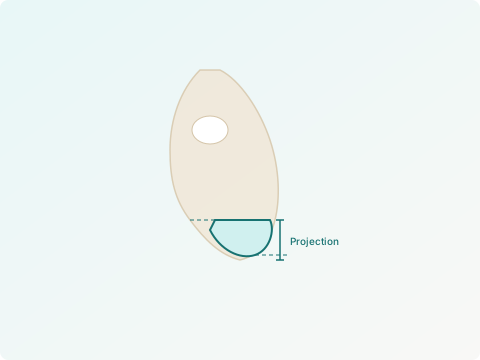
Digital planning
Using X-ray and 3D CT, the surgeon measures chin projection, width, and asymmetry to plan the exact osteotomy direction and distance.
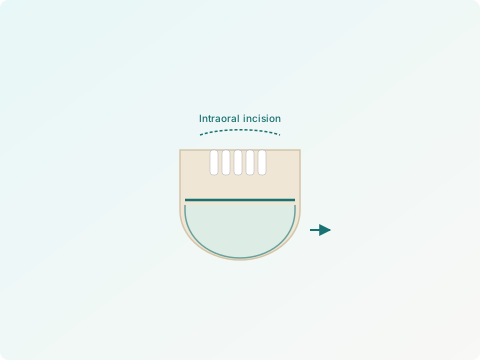
Bone osteotomy
Through an incision inside the lower lip, the chin bone segment is cut and repositioned - advanced, set back, shortened, or rotated as planned.
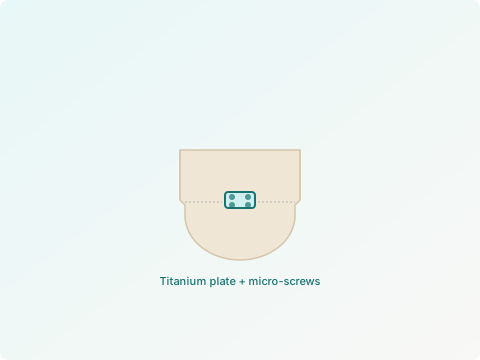
Plate fixation
Titanium micro-plates and screws secure the repositioned bone segment in its new position for stable healing.
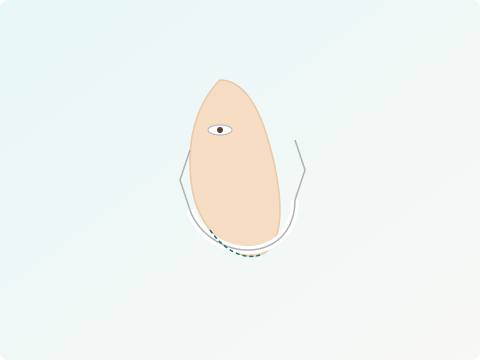
Closure & healing
The intraoral incision is closed with dissolvable sutures. A chin strap supports the tissue. Initial swelling subsides over 2-4 weeks.
Cost · as of 2026
Genioplasty in Korea costs approximately ₩6,000,000 to ₩10,000,000 (roughly $4,200 - $7,000 USD) for a standalone sliding genioplasty. At premium clinics, prices may start from $5,200 USD and above.
When combined with jaw angle reduction (V-line surgery), the total cost ranges from $5,000 - $12,000 USD.
This is significantly more affordable than comparable procedures in the US ($8,000-$15,000) or Europe, while Korean surgeons offer specialized expertise from performing a very high volume of facial bone surgeries.
The price typically includes:
- Surgeon fee, facility, and operating room cost
- General anesthesia
- 1-night hospital stay
- Post-operative medications
- Chin strap/compression garment
- Two follow-up visits
Not included: hotel accommodation, airport transfers, and 3D CT scan (if not included in the clinic package). SMI provides an itemized quote with $0 agency markup.
Who it is for
Genioplasty is ideal for patients who have:
- A long or elongated chin - the chin appears disproportionately long relative to the face, making the lower face look overly extended
- A short or receding chin - a weak chin that makes the nose appear larger or the profile look imbalanced
- A wide chin - excess width at the chin that makes the lower face appear broad or square
- An asymmetric chin - the chin deviates to one side, causing noticeable facial asymmetry
- A protruding or overly projected chin - the chin sticks out too far relative to the rest of the facial profile
- A flat chin - lack of projection when viewed from the side, creating a weak profile
Genioplasty vs. chin implant: Genioplasty moves your own bone and is permanent with no foreign material. Chin implants are simpler and faster but carry risks of shifting, infection, and bone erosion over time. Genioplasty is generally preferred when significant reshaping is needed or when the patient wants to avoid synthetic implants.
Patients with significant bite misalignment (malocclusion) may need orthodontic evaluation before or alongside genioplasty. Your surgeon will assess this during consultation.
Recovery
Recovery from genioplasty follows a structured timeline:
- Day 1-3: Moderate swelling and bruising around the chin and lower jaw. A chin strap or compression bandage is worn to control swelling. A liquid or soft food diet is required. Speaking is possible but may feel stiff.
- Day 3: Face washing and light makeup are typically allowed. Swelling peaks and begins to gradually subside.
- Week 1-2: Swelling continues to decrease. Soft foods can be gradually reintroduced. Most patients feel comfortable in social settings with the chin strap removed.
- Day 14: Intraoral sutures are removed (or dissolve on their own, depending on the type used). Most surgeons clear patients for flying at this point.
- Month 1-3: Residual swelling resolves. The chin contour becomes more defined.
- Month 3-6: Final results are fully visible. The bone has consolidated in its new position.
Flying: Most surgeons recommend waiting 14 days after surgery before flying, after the follow-up check and suture removal.
Diet: Start with liquids, progress to soft foods over 1-2 weeks, and gradually return to a normal diet as comfort allows. Avoid hard or chewy foods for at least 4 weeks.
Titanium plates: The fixation plates typically remain permanently. They do not set off metal detectors and are safe for MRI scans. If desired, they can be removed after approximately one year once the bone has fully healed.
Risks & considerations
Genioplasty is a well-established procedure, but as with any bone surgery, risks include:
- Temporary numbness: The most common side effect. The mental nerve runs near the surgical area, and temporary numbness of the lower lip and chin is expected. Sensation typically returns within 1-3 months, though in rare cases it may take longer.
- Asymmetry: Slight differences in bone positioning that may require revision in rare cases
- Infection: Uncommon, as the intraoral environment heals quickly. Antibiotics are prescribed as prevention.
- Hardware issues: Titanium plates or screws may rarely loosen or become palpable under thin tissue. Removal is straightforward if needed.
- Bone non-union: Extremely rare failure of the bone to heal in its new position
- Soft tissue sagging: In cases of significant chin reduction, the overlying soft tissue may not retract fully, potentially requiring a secondary tightening procedure
Choosing a surgeon experienced in facial bone surgery with 3D CT planning and nerve-mapping technology significantly reduces these risks. Confirm that your surgeon is KSPRS board-certified.
Korea trip checklist
Planning to travel to Seoul for genioplasty? Use this checklist:
- Before departure: Request a virtual consultation. Share a front and profile photo, and a panoramic dental X-ray if available. The surgeon will assess your chin anatomy and recommend the best osteotomy approach.
- Orthodontic considerations: If you are currently wearing braces, inform your surgeon. Orthodontic treatment can typically continue, with a 2-3 month pause around surgery.
- Medications: Stop blood thinners (aspirin, ibuprofen, fish oil, vitamin E) at least 1 week before surgery. Inform your surgeon of all medications.
- Travel plan: Book a minimum 14-day stay in Seoul. You will need to return for suture removal and a follow-up check on day 14.
- What to bring: A blender or portable mixer (for blending food), straws, lip balm, and comfortable clothing that zips or buttons in front.
- Accommodation: Stay near Gangnam or the clinic area. Ensure your accommodation has access to a microwave or kitchen for preparing soft foods.
- Post-op diet: Stock up on protein shakes, soups, yogurt, and pureed foods before surgery day.
- Flying home: Confirm clearance from your surgeon before booking your return flight. Bring a neck pillow for comfort during the flight.
Clinical details are summarized from materials provided by SMI's partner clinics and published guidance from the Korean Society of Plastic and Reconstructive Surgeons (KSPRS). Technique selection is determined by your surgeon during consultation. SMI is a registered patient-facilitation agency, not a medical provider, and does not offer medical advice.
Why get this procedure in Korea
-
World-leading surgical volume
Korean plastic surgeons perform more facial procedures per capita than any other country, refining techniques through high case volumes.
-
Board-certified specialists
All SMI partner surgeons hold Korean Board of Plastic Surgery certification and operate at JCI or KOIHA-accredited facilities.
-
40-60% cost savings
Comparable or superior results at a fraction of US/EU pricing, with no compromise on safety standards or technology.
Before & after results
See real before-and-after results for this procedure, each naming the accredited Seoul clinic that performed it.
View all Genioplasty (Chin Surgery) in Korea resultsYou may also consider
Related guides
- Chin Surgery in Korea: A Complete Guide to Genioplasty for International Patients Considering genioplasty in Korea? Costs, surgeon selection, recovery, and what international patients should expect at Seoul's top chin surgery clinics.
- V-Line & Jaw Reduction Surgery in Korea: A Complete Cost & Safety Guide A clear guide to V-line and jaw reduction surgery in Korea: what it is, cost factors, recovery, and the safety checks bone surgery demands.
- The Real All-In Cost of Plastic Surgery in Korea (Beyond the Quote) The surgery quote is only part of the bill. A clear, honest framework for the all-in cost of plastic surgery in Korea — every line item, plus how to avoid hidden fees and the foreigner price gap.
- How Long Should You Stay in Korea After Plastic Surgery? A logistics hub for international patients — typical recovery-stay windows by procedure, when you can safely fly home, and the visa and interpreter basics for a trip to Seoul.
Frequently asked questions
Sources
- Ministry of Health and Welfare, Republic of Korea
- Medical Korea (KHIDI)
- Korea Health Industry Development Institute (KHIDI)
- Korean Society of Plastic and Reconstructive Surgeons (KSPRS)
- International Society of Aesthetic Plastic Surgery (ISAPS)
Read our editorial policy to learn how we source and verify information.
