Procedure guide
Forehead & Brow Lift in Korea
- Surgery time Around 0.5 – 1 hour
- Anesthesia type Local anesthesia with sleeping sedation
- Hospitalization Not required
- Face wash & makeup 7 days after surgery
- Post-surgery check-up 1 time (depending on the patient's condition)
- Stitches removal 7 days after surgery


A forehead (brow) lift raises low or heavy brows and softens forehead and frown lines, opening up the upper face. Korean surgeons offer endoscopic (small incisions), hairline/trichophytic, and limited-incision approaches, plus non-surgical brow lifting with threads for milder cases.
| Surgery time | Roughly 1–2 hours (thread lift is shorter) |
|---|---|
| Anesthesia | General anesthesia, or sedation with local |
| Hospital stay | Outpatient to a short overnight |
| Back to routine | About 1–2 weeks |
| Final result | Brow position and sensation settle over months |
General information, not medical advice. Suitability, outcomes, and risks vary by individual — discuss your case with a board-certified surgeon. Seoul Medical Insider matches patients to accredited clinics and does not perform procedures.
How it works
A forehead/brow lift raises the brows and smooths the forehead. The sequence depends on the approach:
- Planning: brow position, hairline, and approach (endoscopic, hairline, or thread) are chosen.
- Anesthesia: general anesthesia, or sedation with local.
- Endoscopic: a few small incisions behind the hairline let a camera and instruments release and re-fix the brow higher; or
- Hairline/open: an incision at or behind the hairline lifts and trims excess forehead skin; thread lifts use sutures under the skin.
- Closing: incisions are sutured or clipped and removed per the surgeon.
Your surgeon picks the approach for your brow and hairline.
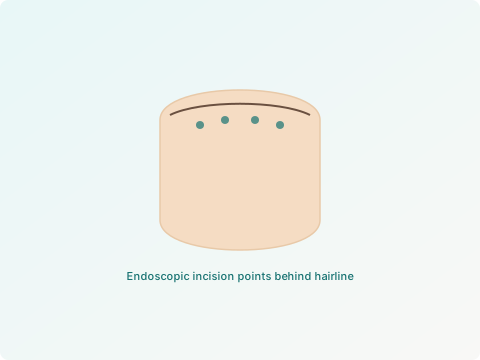
Approach selection
For endoscopic lift: 3-5 small incisions behind the hairline. For sub-brow lift: an incision just below the eyebrow following the brow shape.
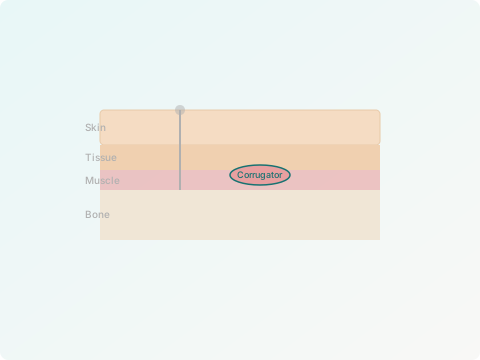
Tissue release
The forehead tissue is freed from the underlying bone, and the muscles causing frown lines (corrugator, procerus) are weakened or partially removed.
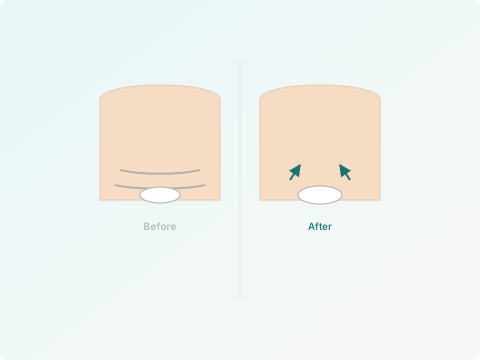
Brow elevation
The brow and forehead tissues are lifted to the desired position, opening up the eye area and smoothing forehead wrinkles.
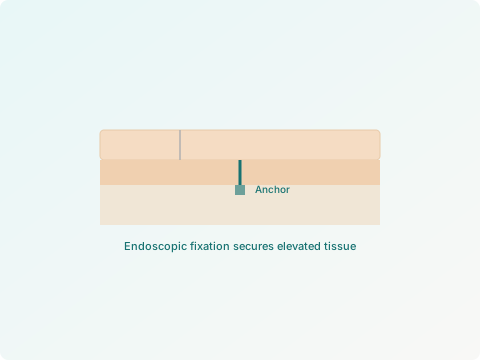
Fixation & closure
Endoscopic fixation devices or sutures anchor the tissue in its elevated position. Incisions are closed within the hairline for minimal visibility.
Cost · as of 2026
Through Seoul Medical Insider patients pay no markup — accredited-clinic pricing is passed through transparently, and you get a written all-in quote before deciding.
What drives the price: approach (endoscopic vs. hairline vs. thread), whether combined with upper-eyelid surgery, anesthesia, and surgeon.
For current, itemised ranges and how to avoid hidden fees, see our facial-lift guides and all-in cost breakdown. Pricing changes over time — reviewed 2026.
Who it is for
Considered for heavy or sagging brows, deep forehead lines, or a tired upper-face look — often when eyebrow position (not just eyelid skin) is the issue. A surgeon checks brow position, hairline, and skin to choose the approach.
Recovery
- Week 1–2: swelling/bruising around the forehead and eyes; possible scalp numbness; sutures/clips removed per surgeon.
- Weeks 3–6: swelling settles; return to routine.
- Months 1–6: sensation and final brow position settle.
Plan your stay for suture removal and a check. Timelines vary.
Risks & considerations
Possible risks include swelling, bruising, temporary scalp numbness or itching, hairline/scar visibility, asymmetry, a raised hairline, or (rarely) nerve-related changes affecting brow movement. Your surgeon explains risks for the chosen approach. Accredited setting recommended.
Korea trip checklist
- Match the approach (endoscopic vs. hairline vs. thread) to your brow position and hairline.
- Verify the surgeon’s credentials and that the operating clinic is accredited.
- Confirm in writing who performs the surgery (avoid undisclosed substitution / "ghost surgery").
- Get an itemised, all-in quote in writing (surgery, anesthesia, facility, aftercare).
- Arrange medical interpretation and a clear post-op contact for questions back home.
- Plan your stay for suture removal and a follow-up.
Clinical details are summarized from materials provided by SMI's partner clinics and published guidance from the Korean Society of Plastic and Reconstructive Surgeons (KSPRS). Technique selection is determined by your surgeon during consultation. SMI is a registered patient-facilitation agency, not a medical provider, and does not offer medical advice.
Why get this procedure in Korea
-
Pioneering anti-aging techniques
Korean surgeons are recognised for advanced SMAS and deep-plane techniques that deliver natural, long-lasting results.
-
Comprehensive aftercare
Clinics offer structured recovery programs including LED therapy, lymphatic drainage, and scheduled follow-ups before you fly home.
-
Significant cost advantage
Anti-aging procedures in Korea cost 40-60% less than in Western countries, even at premium clinics with the latest equipment.
Before & after results
See real before-and-after results for this procedure, each naming the accredited Seoul clinic that performed it.
View all Forehead & Brow Lift in Korea resultsYou may also consider
Related guides
- Full Facelift in Korea: A Complete Guide for International Patients in 2026 Full facelift in Seoul, 2026: techniques, surgeon credentials, cost ranges, recovery timeline, and how international patients book safely with SMI.
- The Real All-In Cost of Plastic Surgery in Korea (Beyond the Quote) The surgery quote is only part of the bill. A clear, honest framework for the all-in cost of plastic surgery in Korea — every line item, plus how to avoid hidden fees and the foreigner price gap.
- How Long Should You Stay in Korea After Plastic Surgery? A logistics hub for international patients — typical recovery-stay windows by procedure, when you can safely fly home, and the visa and interpreter basics for a trip to Seoul.
- Is Plastic Surgery in Korea Safe? A Patient's Guide to Avoiding Ghost Surgery A balanced look at safety in Korea's plastic surgery industry — what ghost surgery is, the laws that protect you, and the checks every international patient should make before booking.
Frequently asked questions
Sources
- Ministry of Health and Welfare, Republic of Korea
- Medical Korea (KHIDI)
- Korea Health Industry Development Institute (KHIDI)
- Korean Society of Plastic and Reconstructive Surgeons (KSPRS)
- International Society of Aesthetic Plastic Surgery (ISAPS)
Read our editorial policy to learn how we source and verify information.
