
Procedure guide
Non-Incision Double Eyelid Surgery in Korea
- Surgery time Around 30 minutes
- Anesthesia type Local anesthesia with sleeping sedation
- Hospitalization Not required
- Face wash & makeup 5 days after surgery
- Post-surgery check-up 1 time (depending on patient condition)
- Stitches removal 5 days after surgery



Non-incision double eyelid surgery (비절개 쌍꺼풀 수술), also known as the "buried suture" technique, creates a natural-looking double eyelid crease through tiny puncture points without a full incision. This makes it the least invasive method of double eyelid creation, offering faster recovery and no visible scarring.
The procedure is one of the most popular cosmetic surgeries in Korea, where surgeons have perfected the technique over tens of thousands of cases. Korean surgeons are particularly skilled at designing crease heights and shapes that harmonize with each patient's unique eye anatomy and facial features.
Because no tissue is cut or removed, this method is best suited for patients with thin eyelid skin, minimal orbital fat, and good skin elasticity. Patients with thicker or heavier eyelids may be better served by the incisional method.
| Surgery time | Approximately 30 minutes |
|---|---|
| Anesthesia | Local anesthesia with sleeping sedation |
| Hospitalization | Not required (outpatient) |
| Stitch removal | 5 days after surgery |
| Recovery | 3 - 5 days (mild swelling) |
How it works
Non-incision double eyelid surgery works by creating an adhesion between the eyelid skin and the underlying levator muscle using buried sutures, mimicking the natural mechanism that forms a double eyelid fold.
- Crease design and marking: With the patient sitting upright, the surgeon carefully marks the desired crease height and curvature on both upper eyelids. The design is customized to match your facial proportions, eye shape, and aesthetic goals.
- Micro-puncture points: Using a fine needle, 3-7 tiny puncture dots (1-2mm each) are made along the marked crease line. The number depends on the eyelid anatomy and the surgeon's technique.
- Buried suture placement: Fine, non-absorbable sutures are threaded through the puncture points, connecting the eyelid skin to the levator aponeurosis (the muscle that opens the eye). This creates the adhesion point where the crease will form.
- Symmetry check: Both eyes are compared for crease height, depth, and symmetry. The surgeon makes fine adjustments before securing the final suture knots beneath the skin surface.
The buried sutures form a permanent scar adhesion over time, maintaining the double eyelid fold. Because no skin or fat is removed, the procedure is reversible within the first few weeks if the patient is unsatisfied, which is a unique advantage over the incisional method.
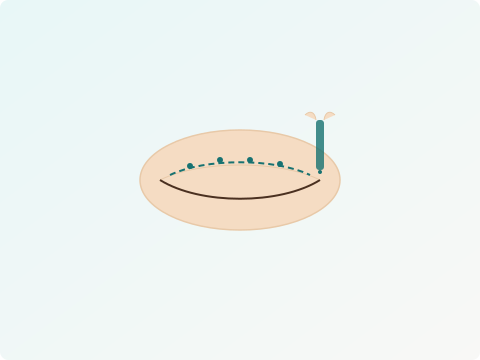
Crease design & marking
The surgeon carefully designs the double eyelid crease height and shape on the upper lids, customized to your eye anatomy, skin thickness, and facial features.
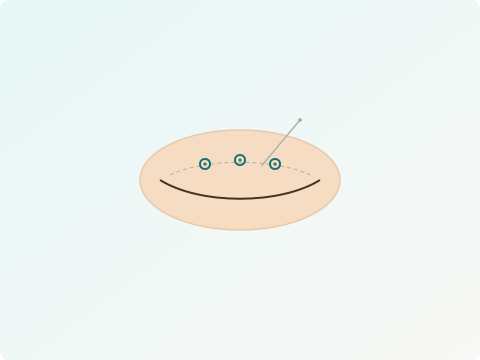
Micro-puncture points
Small 1-2mm puncture dots (typically 3-7 depending on the case) are made along the marked crease line. No full incision is needed.
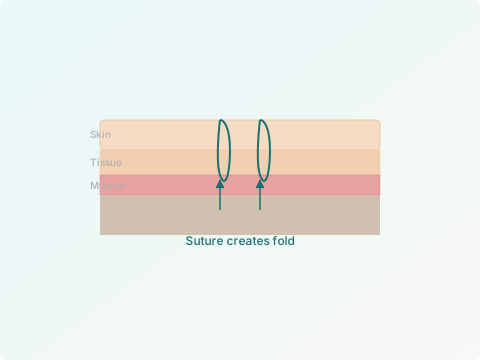
Suture crease formation
Fine sutures are threaded through the micro-puncture points to connect the eyelid skin to the levator muscle, creating a natural double eyelid fold.
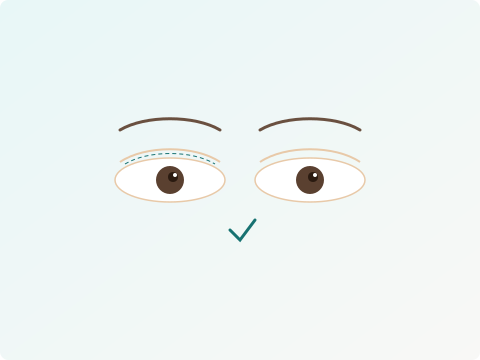
Natural result
The sutures form a permanent adhesion that shapes the double eyelid crease. Both eyes are checked for symmetry and crease depth before completion.
Cost · as of 2026
Non-incision double eyelid surgery in Korea costs approximately ₩1,000,000 to ₩3,500,000 (roughly $800 - $2,500 USD). When combined with ptosis correction, the cost ranges from $2,000 - $4,000 USD.
This is significantly more affordable than comparable procedures in the US ($3,000-$5,000) or Singapore ($2,500-$4,000), while Korean surgeons offer exceptional expertise from performing a very high volume of eyelid procedures.
The price typically includes:
- Surgeon fee and facility cost
- Local anesthesia with sedation
- Post-operative medications and eye drops
- One follow-up visit and suture removal
Not included: hotel accommodation, airport transfers, and additional procedures if combined. SMI provides an itemized quote with $0 agency markup.
Who it is for
Non-incision double eyelid surgery is ideal for patients who:
- Have thin eyelid skin — the buried suture technique works best when the skin is thin enough for the suture adhesion to hold firmly
- Have minimal orbital fat — less fat around the eyes allows the sutures to create a cleaner, more defined crease
- Have good skin elasticity — younger patients or those without significant skin laxity are the best candidates
- Want a natural-looking crease — the non-incision method tends to produce softer, more natural-looking folds
- Are first-time eyelid surgery patients — the technique is ideal for those who have not had prior eyelid procedures
- Want minimal downtime — recovery is significantly faster than with incisional surgery
This procedure may not be suitable if you have:
- Thick or puffy eyelid skin with excess orbital fat
- Significant skin sagging or laxity on the upper eyelids
- Previous failed non-incision surgery (incisional revision is typically recommended)
- Ptosis (droopy eyelid) that requires muscle tightening, though non-incision can sometimes be combined with mild ptosis correction
A thorough consultation will determine whether the non-incision or incisional method is more appropriate for your specific anatomy.
Recovery
Recovery from non-incision double eyelid surgery is one of the fastest among all eyelid procedures:
- Day 1: Mild swelling and possible light bruising around the eyes. Cold compresses help reduce swelling. Most patients can return to light daily activities the same day or the next day.
- Day 2-3: Swelling begins to subside noticeably. The crease line becomes more defined as swelling decreases.
- Day 5: Sutures are removed (or checked, depending on technique). Face washing and light makeup are typically allowed. Most patients feel comfortable in social settings.
- Week 2-4: Residual swelling continues to resolve. The crease settles into a more natural shape.
- Month 1-3: Final results become apparent. The crease reaches its permanent shape and natural appearance.
Flying: Most surgeons clear patients for flying 5-7 days after surgery, after suture removal.
Activity restrictions: Avoid rubbing your eyes for at least 2 weeks. No swimming or heavy exercise for 1-2 weeks. Contact lenses can be worn again after 1-2 weeks.
Revision note: If you are considering a revision, wait a minimum of 6 months for the tissue to fully heal and the crease to stabilize.
Risks & considerations
Non-incision double eyelid surgery is considered one of the safest cosmetic procedures, but potential risks include:
- Crease loosening or loss: The most common concern. In a small percentage of cases, the buried sutures may loosen over time (particularly in patients with thicker eyelids), causing the crease to become shallow or disappear. Revision or conversion to the incisional method can correct this.
- Asymmetry: Slight differences in crease height or depth between the two eyes, which may require minor adjustment
- Suture granuloma: Rare. A small lump can form if the body reacts to the buried suture material. This is usually treatable with a minor procedure.
- Temporary swelling: While swelling is minimal compared to incisional surgery, some patients experience prolonged mild swelling for a few weeks
- Infection: Extremely rare with proper aftercare and hygiene
The procedure has a key advantage: it is potentially reversible within the first few weeks if the patient is not satisfied, as the sutures can be removed before permanent adhesion forms. Choose a KSPRS board-certified surgeon experienced in Asian eyelid anatomy for the best outcome.
Korea trip checklist
Planning to travel to Seoul for non-incision double eyelid surgery? Use this checklist:
- Before departure: Request a virtual consultation. Share close-up photos of your eyes (open and closed, looking straight and upward) so the surgeon can assess your eyelid thickness and suitability for the non-incision method.
- Medications: Stop blood thinners (aspirin, ibuprofen, fish oil, vitamin E) at least 1 week before surgery.
- Travel plan: Book at least a 5-7 day stay in Seoul. You will need to return for suture removal on day 5.
- What to bring: Sunglasses (to protect healing eyes and for comfort in public), lubricating eye drops, and a hat or cap for sun protection.
- Day of surgery: Arrive without eye makeup. Wear comfortable clothing. The entire procedure typically takes under an hour including preparation.
- Accommodation: Stay near Gangnam or the clinic area for easy follow-up access.
- Post-op care: Apply cold compresses as directed. Sleep with your head slightly elevated for the first 2-3 nights. Avoid rubbing your eyes.
- Flying home: Confirm clearance from your surgeon before your return flight (usually cleared at day 5-7).
Clinical details are summarized from materials provided by SMI's partner clinics and published guidance from the Korean Society of Plastic and Reconstructive Surgeons (KSPRS). Technique selection is determined by your surgeon during consultation. SMI is a registered patient-facilitation agency, not a medical provider, and does not offer medical advice.
Why get this procedure in Korea
-
World-leading surgical volume
Korean plastic surgeons perform more facial procedures per capita than any other country, refining techniques through high case volumes.
-
Board-certified specialists
All SMI partner surgeons hold Korean Board of Plastic Surgery certification and operate at JCI or KOIHA-accredited facilities.
-
40-60% cost savings
Comparable or superior results at a fraction of US/EU pricing, with no compromise on safety standards or technology.
You may also consider
Frequently asked questions
Sources
- Ministry of Health and Welfare, Republic of Korea
- Medical Korea (KHIDI)
- Korea Health Industry Development Institute (KHIDI)
- Korean Society of Plastic and Reconstructive Surgeons (KSPRS)
- International Society of Aesthetic Plastic Surgery (ISAPS)
Read our editorial policy to learn how we source and verify information.
