Procedure guide
Upper Eyelid Surgery (Upper Blepharoplasty) in Korea
- Surgery time Around 0.5 – 1 hour
- Anesthesia type Local anesthesia with sleeping sedation
- Hospitalization Not required
- Face wash & makeup 7 days after surgery
- Post-surgery check-up 1 time (depending on the patient's condition)
- Stitches removal 7 days after surgery



Upper blepharoplasty is a surgical procedure that addresses drooping and sagging upper eyelids. As we age, the skin of the upper eyelids stretches, the muscles weaken, and fat pockets may bulge — causing the lids to droop and, in some cases, impair peripheral vision.
This procedure is particularly popular in Korea, where surgeons perform a high volume of eyelid surgeries and have refined techniques to deliver natural-looking results tailored to each patient's facial anatomy.
The surgery requires a precise diagnosis to determine which areas need the most attention — whether it is excess skin, weakened muscle, or protruding fat — and to avoid overcorrection that could lead to an unnatural appearance.
At a glance | |
Surgery time | 0.5 – 1 hour |
|---|---|
Anesthesia | Local anesthesia with sleeping sedation |
Hospitalization | Not required (outpatient) |
Stitch removal | 7 days after surgery |
Recovery | 1 – 2 weeks |
How it works
Upper blepharoplasty removes excess skin, muscle, and fat from the upper eyelid to restore a more open, youthful eye appearance. The surgeon carefully designs the incision along the natural eyelid crease so the scar is virtually invisible once healed.
- Design and marking: The surgeon measures the amount of excess skin by gently pinching the upper eyelid. The incision line is drawn along the natural crease, with the height and shape customized to match your facial features.
- Incision and tissue removal: Through the marked incision, the surgeon removes the precise amount of excess skin. If needed, a strip of weakened orbicularis muscle and herniated orbital fat are also excised.
- Suturing: The incision is closed with fine sutures along the eyelid crease. This ensures the scar sits within the natural fold and becomes nearly invisible.
- Immediate effect: The eyes appear larger and more open immediately after surgery. As swelling resolves over 1–2 weeks, the final natural result emerges.
The procedure differs from standard double eyelid surgery (쌍꺼풀 수술) in that its primary goal is removing excess sagging skin rather than creating a new eyelid crease. It is most commonly performed on patients in their 40s and older who have developed upper eyelid laxity due to aging.
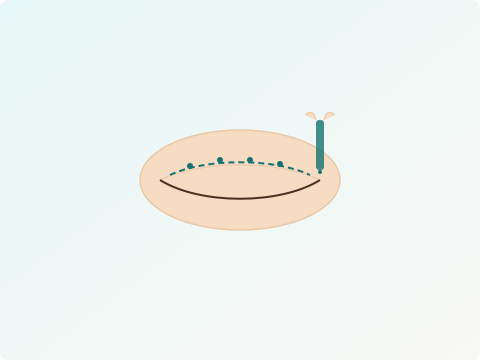
Design & marking
The surgeon designs the incision line along the natural upper eyelid crease, matching the height and shape to your facial features and the degree of skin excess.
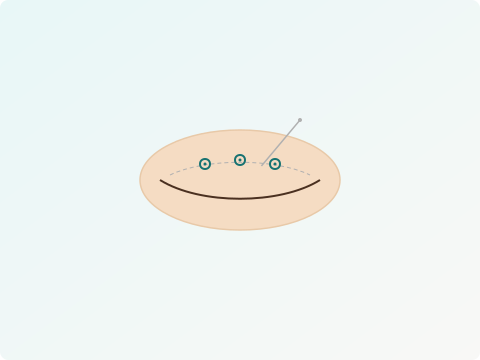
Excess skin & fat removal
Through the marked incision, excess drooping skin, weakened orbicularis muscle, and protruding orbital fat are precisely excised to open up the eye area.
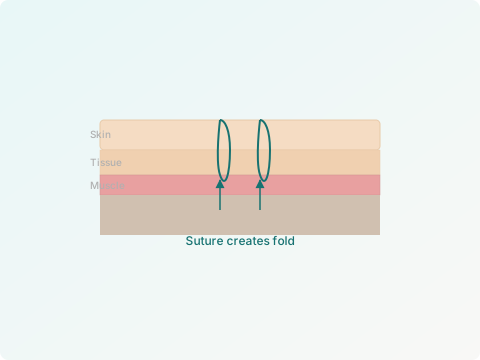
Skin suturing
The upper eyelid skin is sutured with fine stitches along the crease line, ensuring minimal scarring that is hidden within the natural fold.

Natural, youthful result
The eyes appear larger and more open. Forehead wrinkles caused by compensatory muscle use are reduced, creating a naturally rejuvenated appearance.
Cost · as of 2026
Upper blepharoplasty costs in Korea range from ₩2,100,000 to ₩6,400,000 (approximately $1,500 – $4,500 USD) depending on the clinic, surgeon experience, and whether additional procedures such as ptosis correction are combined.
This is significantly more affordable than comparable procedures in the US ($3,000–$7,000) or other Western countries, while Korean surgeons offer equal or superior expertise due to the high volume of eyelid surgeries performed.
The price typically includes:
- Surgeon fee and facility/operating room cost
- Local anesthesia with sedation
- Post-operative medications
- One follow-up visit and suture removal
Not included: hotel accommodation, airport transfers, and additional post-op treatments (if needed). SMI provides an itemized quote with $0 agency markup.
Who it is for
Upper blepharoplasty is ideal for patients who experience:
- Saggy upper eyelid skin — excess skin that droops over the eyelid crease, making the eyes look tired or aged
- Impaired peripheral vision — severely drooping skin that partially obstructs the upper visual field
- Forehead strain — unconsciously raising the eyebrows to compensate for heavy eyelids, leading to forehead wrinkles and headaches
- Adequate brow-to-eye distance — sufficient space between the eyebrows and eyes (if the brows are also drooping, a brow lift may be more appropriate)
- Sagging eye corners — outer corners of the eyes that have dropped, creating a tired appearance
The procedure is not recommended if the primary issue is drooping eyebrows rather than excess eyelid skin. In such cases, a forehead lift or sub-brow lift may be more effective. A thorough consultation will determine which approach — or combination — best addresses your concerns.
Recovery
Recovery from upper blepharoplasty is relatively straightforward:
- Day 1–3: Swelling and bruising around the eyes are most noticeable. Cold compresses and sleeping with the head elevated help reduce swelling. Mild discomfort is managed with prescribed pain medication.
- Day 7: Sutures are removed. Most patients can resume face washing and light makeup. The incision line may still appear pink.
- Week 2–3: Bruising fades and swelling continues to decrease. Most patients feel comfortable returning to social activities.
- Month 1–3: The incision scar fades within the crease line. Final results become apparent as all residual swelling resolves.
Flying: Most surgeons clear patients for flying 7–10 days after surgery, once sutures are removed and there are no complications.
Activity restrictions: Avoid strenuous exercise for 2–3 weeks. Do not wear contact lenses for 2 weeks post-surgery.
Risks & considerations
Upper blepharoplasty is generally considered a safe procedure with a low complication rate. However, as with any surgery, risks include:
- Asymmetry: Slight differences between the two eyes, which may require minor revision
- Overcorrection: Removing too much skin can make it difficult to fully close the eyes, leading to dryness — this is why choosing an experienced surgeon is critical
- Undercorrection: Insufficient skin removal may require a secondary procedure
- Scarring: While scars are hidden in the crease, some patients may develop hypertrophic scarring
- Temporary dryness: Mild dry eye symptoms may occur for a few weeks and are managed with lubricating eye drops
- Hematoma: Rare bleeding under the skin that may require drainage
Choosing a KSPRS board-certified surgeon who specializes in eyelid surgery significantly reduces these risks.
Korea trip checklist
If you are planning to travel to Seoul for upper blepharoplasty, use this checklist:
- Before departure: Request a virtual consultation with your surgeon. Share clear photos of your eyes (open and closed) for pre-assessment.
- Medications: Stop blood thinners (aspirin, ibuprofen, fish oil, vitamin E) at least 1 week before surgery. Inform your surgeon of all medications.
- Travel plan: Book at least a 7-day stay in Seoul — you need to return for suture removal on day 7.
- What to bring: Sunglasses (to protect healing eyes from sun and wind), lubricating eye drops, and loose/comfortable clothing that buttons or zips (avoid pulling over the head).
- Accommodation: Stay near Gangnam or the clinic area for easy follow-up access.
- Post-op care: Attend the scheduled follow-up visit. Keep your head elevated while sleeping for the first few days.
- Flying home: Confirm clearance from your surgeon before booking your return flight.
Clinical details are summarized from materials provided by SMI's partner clinics and published guidance from the Korean Society of Plastic and Reconstructive Surgeons (KSPRS). Technique selection is determined by your surgeon during consultation. SMI is a registered patient-facilitation agency, not a medical provider, and does not offer medical advice.
Why get this procedure in Korea
-
World-leading surgical volume
Korean plastic surgeons perform more facial procedures per capita than any other country, refining techniques through high case volumes.
-
Board-certified specialists
All SMI partner surgeons hold Korean Board of Plastic Surgery certification and operate at JCI or KOIHA-accredited facilities.
-
40-60% cost savings
Comparable or superior results at a fraction of US/EU pricing, with no compromise on safety standards or technology.
You may also consider
Frequently asked questions
Sources
- Ministry of Health and Welfare, Republic of Korea
- Medical Korea (KHIDI)
- Korea Health Industry Development Institute (KHIDI)
- Korean Society of Plastic and Reconstructive Surgeons (KSPRS)
- International Society of Aesthetic Plastic Surgery (ISAPS)
Read our editorial policy to learn how we source and verify information.
