
Procedure guide
Areola & Nipple Correction in Korea
- Surgery time Around 0.5 – 1 hour
- Anesthesia type Local anesthesia
- Hospitalization Not required
- Face wash & makeup 3 days after surgery
- Post-surgery check-up 1 time (depending on the patient's condition)
- Stitches removal 7 – 10 days after surgery



Areola and nipple correction encompasses a group of procedures that address the size, shape, symmetry, or projection of the areola and nipple complex. Common concerns include enlarged areolae after pregnancy or weight changes, puffy or protruding areolae, inverted (retracted) nipples, and asymmetry between the two sides. These issues can affect self-confidence and, in the case of inverted nipples, may also interfere with breastfeeding.
Korean plastic surgeons perform areola and nipple correction frequently, often as a standalone procedure or combined with breast augmentation, reduction, or lift surgery. Techniques are refined to preserve sensation and, where possible, the milk-duct system. The procedure is relatively quick, performed under local anaesthesia in most cases, and recovery is straightforward.
| Surgery time | 30 – 60 minutes |
| Anaesthesia | Local anaesthesia (sedation optional) |
| Hospital stay | Day-surgery (outpatient) |
| Back to routine | 2 – 3 days |
| Final result | 2 – 3 months |
This page is for general information only and does not replace a medical consultation. Results vary depending on anatomy, technique, and individual healing characteristics.
How it works
The surgical approach depends on the specific concern being addressed. Below are the general steps for the most common variations — areola reduction and inverted-nipple repair.
- Planning & marking — The surgeon measures the existing areola diameter and nipple projection, then marks the desired new areola size (typically 38 – 42 mm diameter for women, slightly smaller for men). For inverted nipples, the grade of inversion (I – III) is assessed to determine whether a duct-preserving or duct-dividing technique is appropriate.
- Anaesthesia — Local anaesthetic is injected around the areola, numbing the area completely. Oral or IV sedation may be offered for patient comfort, but general anaesthesia is usually unnecessary.
- Areola reduction — A doughnut-shaped ring of excess areola skin is excised around the outer edge. The surrounding breast skin is then advanced inward and sutured to the new areola margin using a purse-string technique to minimise stretching over time.
- Inverted-nipple repair — A small incision is made at the base of the nipple. The fibrous bands pulling the nipple inward are carefully released. In mild cases (Grade I – II), the milk ducts can be preserved. In severe cases (Grade III), some ducts may need to be divided to allow the nipple to project permanently. Internal sutures or a small supporting splint hold the nipple in its new position during healing.
- Closure & dressing — Fine absorbable or removable sutures close the incisions. A protective dressing or nipple shield is applied to maintain the new shape during the early healing phase.
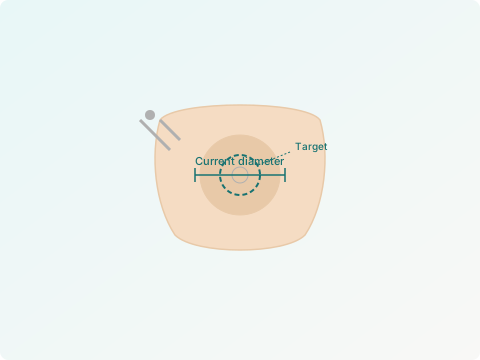
Assessment & planning
The surgeon evaluates the size, shape, and symmetry of the areola and nipple. The desired correction (reduction, enlargement, or inversion repair) is planned.
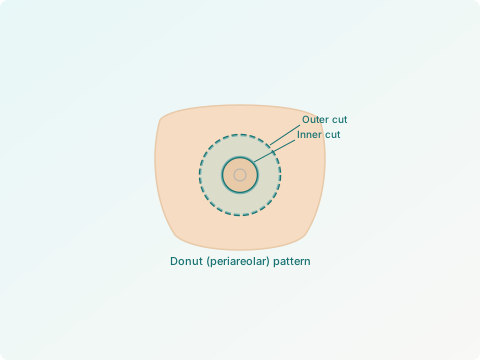
Incision design
For areola reduction, a circular incision removes a donut-shaped ring of tissue. For inverted nipples, a small incision at the nipple base releases the tethering ducts.
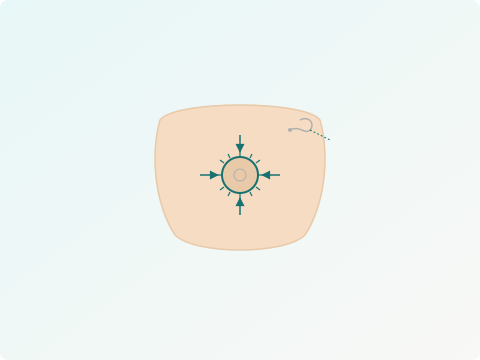
Tissue modification
Excess areolar tissue is excised and the edges are brought together, or the inverted nipple is released from its retracted position and secured with internal sutures.
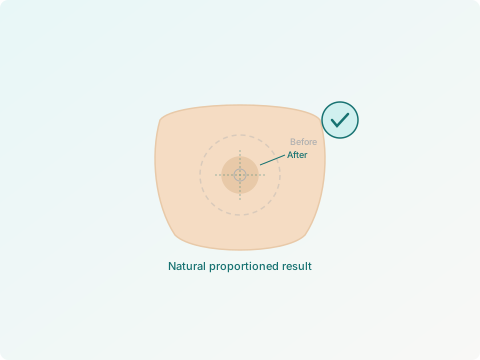
Closure & healing
Fine sutures close the incision along the areola border where the color transition naturally conceals the scar. Sensitivity is typically preserved.
Cost · as of 2026
Through Seoul Medical Insider, pricing for areola and nipple correction is quoted upfront with no hidden charges. Your estimate covers the surgeon's fee, local anaesthesia, facility use, dressings, and post-operative follow-up visits.
The cost depends on the specific procedure — a standalone areola reduction differs in complexity from an inverted-nipple repair, and bilateral correction (both sides) is standard. If the correction is combined with another breast procedure such as augmentation or a lift, the additional cost for the areola or nipple work is typically modest since the area is already being accessed. The grade of nipple inversion also affects complexity and therefore price.
Pricing information is reviewed and updated as of 2026. Reach out to Seoul Medical Insider with your concerns and photos for a personalised quote ahead of your consultation.
Who it is for
Areola and nipple correction is a focused procedure with high patient satisfaction when expectations are realistic.
- Suited: Women whose areolae have stretched significantly after pregnancy, breastfeeding, or weight fluctuations and wish to restore a proportionate appearance.
- Suited: Men with puffy or enlarged areolae, often associated with gynecomastia, who want a flatter chest contour.
- Suited: Patients with unilateral or bilateral inverted nipples (Grade I – III) who experience functional concerns (difficulty breastfeeding) or aesthetic dissatisfaction.
- Suited: Individuals with noticeable nipple or areola asymmetry who desire improved symmetry.
- Discuss carefully: Women who plan to breastfeed in the future — areola reduction generally preserves ducts, but inverted-nipple repair (especially Grade III) may compromise breastfeeding ability.
- Discuss carefully: Patients with a history of keloid or hypertrophic scarring around the chest, as the circular scar may widen or thicken.
Recovery
- Week 1: Mild soreness, swelling, and sensitivity around the areola and nipple. Pain is well controlled with over-the-counter analgesics. A protective dressing or nipple shield is worn to prevent friction from clothing. Avoid raising arms overhead or lifting heavy objects.
- Weeks 2 – 3: Sutures are removed (if non-absorbable) around day 7 – 10. Swelling continues to diminish. The areola may appear slightly darker or redder than its final colour. A soft, non-wired bra or sports bra should be worn for comfort and support.
- Weeks 4 – 8: Most swelling has resolved. The scar around the areola begins to fade. Normal exercise, including upper-body workouts, can generally resume around week 4 – 6 with surgeon approval. Nipple sensation, if temporarily reduced, typically starts returning.
- Months 2 – 3: The final shape, size, and colour of the areola and nipple are apparent. Scars continue to mature and lighten over the following months. Silicone-based scar gel may be recommended.
Because this is a day-surgery procedure under local anaesthesia, a stay of 5 – 7 days in Korea after the procedure is usually sufficient. This allows for a suture-removal visit and a final check before you travel home.
Risks & considerations
Areola and nipple correction is considered a low-risk procedure, but potential complications include temporary or permanent changes in nipple sensation (either increased sensitivity or reduced feeling), partial loss of nipple projection after inverted-nipple repair (recurrence of inversion, more common in Grade III cases), widening or thickening of the circular scar around the areola, minor asymmetry in areola size or nipple position, infection at the incision site, delayed wound healing, and — in inverted-nipple repair where milk ducts are divided — inability to breastfeed from the affected side. Allergic reactions to suture material or dressings are uncommon but possible.
Korea trip checklist
- Pack several soft, wire-free bras or sports bras that provide gentle support without compressing the nipple area.
- Bring button-front or zip-front tops — pulling shirts over your head will be uncomfortable for the first few days.
- Confirm whether your clinic provides nipple shields or protective dressings, or purchase them in advance.
- Stop blood-thinning medications and supplements (aspirin, fish oil, vitamin E) at least 7 days before surgery, as instructed.
- Plan to stay in Korea for at least 5 – 7 days post-procedure for suture removal and a follow-up check.
- If combining this procedure with breast augmentation or a lift, clarify the total recovery timeline with your surgeon — it will be longer than for areola/nipple correction alone.
- Request an operative summary in English before leaving the clinic so your home physician can provide continuity of care.
Clinical details are summarized from materials provided by SMI's partner clinics and published guidance from the Korean Society of Plastic and Reconstructive Surgeons (KSPRS). Technique selection is determined by your surgeon during consultation. SMI is a registered patient-facilitation agency, not a medical provider, and does not offer medical advice.
Why get this procedure in Korea
-
Advanced body sculpting
Korean clinics use the latest liposuction and fat grafting technologies, with surgeons trained in precise body contouring techniques.
-
Accredited surgical centres
All procedures are performed in KOIHA-accredited or JCI-certified hospitals with full anaesthesia and recovery monitoring.
-
All-inclusive packages
Many clinics offer international patient packages covering surgery, hospital stay, compression garments, and post-op care.
You may also consider
Related guides
- Breast Augmentation in Korea: Costs, Implant Options, Recovery, and How to Choose a Safe Clinic A practical overview of breast augmentation in South Korea for international patients — covering typical price ranges, popular implant brands, what recovery looks like, and the credentials to check before booking a clinic.
- Breast Reduction Surgery in Korea: A Comprehensive Guide for International Patients Breast reduction surgery in Korea offers international patients access to highly trained board-certified plastic surgeons at competitive costs. This guide covers techniques, candidacy, pricing, recovery, and safety tips for planning your procedure.
- How Long Should You Stay in Korea After Plastic Surgery? A logistics hub for international patients — typical recovery-stay windows by procedure, when you can safely fly home, and the visa and interpreter basics for a trip to Seoul.
Frequently asked questions
Sources
- Ministry of Health and Welfare, Republic of Korea
- Medical Korea (KHIDI)
- Korea Health Industry Development Institute (KHIDI)
- Korean Society of Plastic and Reconstructive Surgeons (KSPRS)
- International Society of Aesthetic Plastic Surgery (ISAPS)
Read our editorial policy to learn how we source and verify information.
