
Volume Mini Facelift in Korea: The International Patient's Guide to Natural, Youthful Lifting
US, Canada, and Singapore patients travel to Seoul for natural mini facelift results — costs, technique, downtime, and clinic selection explained.

Researching the treatment itself? Read our full procedure guide — cost, recovery, candidacy and risks.
Considering a mini facelift abroad? Discover why patients from the US, Canada, and Singapore travel to Seoul for Volume Mini Facelift — a near-scarless, fast-recovery procedure that lifts sagging jowls and restores cheek volume in a single trip.
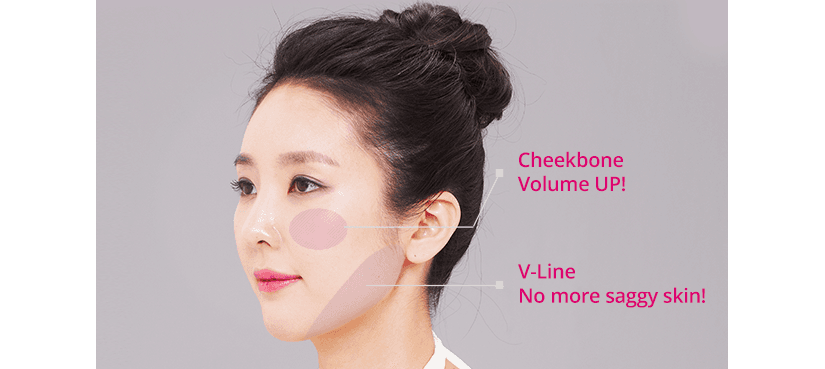
Why International Patients Are Looking to Korea for Facial Lifting
If you've been searching for a way to address a softening jawline, hollow cheekbones, or that persistently tired look that no skincare routine seems to fix, you're not alone — and you're no longer limited to the options available in your home country.
Each year, thousands of patients from the United States, Canada, Singapore, and Australia travel to Seoul for one of Korea's most refined cosmetic procedures: the Volume Mini Facelift.
As an English-speaking medical concierge based in Seoul, we work directly with Korea's leading facial plastic surgery clinics to connect overseas patients with the country's most experienced lifting specialists. This guide explains what Volume Mini Facelift is, why it has become one of the most requested procedures among our North American clients, and exactly what to expect when planning your trip.
What Is Volume Mini Facelift?
Volume Mini Facelift is a refined version of traditional facelift surgery that combines two complementary techniques in a single procedure:
A mini lift along the jawline to remove sagging skin and redefine contour
Front cheek fat grafting to restore lost volume in the midface
The result is a face that looks lifted and full — not pulled tight or hollowed out. Unlike older techniques that simply stretched the skin, Volume Mini Facelift addresses the two main signs of aging simultaneously: descent (sagging) and deflation (volume loss).
Because the incisions follow the natural curve of the ear and hairline, scars are virtually undetectable once healed. Recovery is significantly faster than with a full SMAS facelift, which is why this procedure has become especially popular with overseas patients on a limited travel window.
Why the Korean "Volume" Approach Outperforms Traditional Lifts
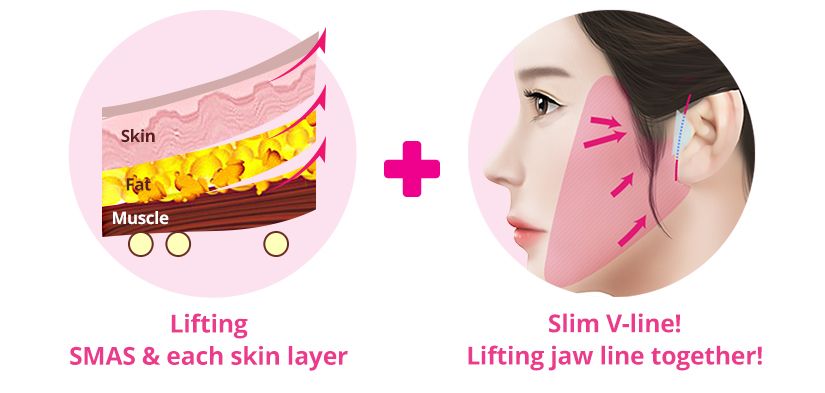
The Minus — Layer-by-Layer Jawline Lift
Most conventional facelifts tighten the SMAS (Superficial Muscular Aponeurotic System) as a single block. Korean specialists take a more nuanced approach: they separate the soft tissue into three layers — skin, fat, and muscle — and reposition each independently.
This technique allows the surgeon to:
Pull only what genuinely needs to be pulled
Avoid the over-tightened, "windswept" look common with older techniques
Sculpt a refined V-line through targeted jawline liposuction
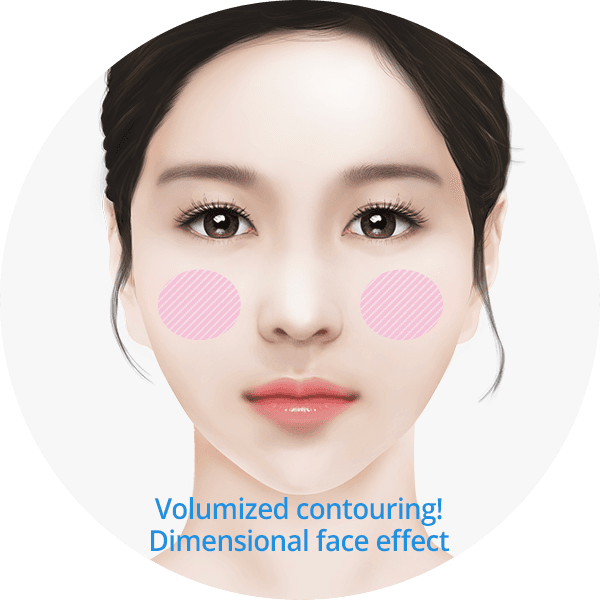
The Plus — Restoring Volume Where You've Lost It
After your mid-30s, most adults begin losing fat in the midface. This is what creates the drawn, "deflated" look — even in patients who have otherwise maintained beautiful skin.
By harvesting fat from the patient's own body and transplanting it into multiple layers of the front cheek, the surgeon restores a soft, naturally rounded shape that no filler can match in longevity. The fat is integrated through several depths to maximize engraftment.
The combined effect: a jawline that looks years younger, and cheeks that look healthy and full — without the puffy, "overfilled" appearance that often gives away cosmetic work.
Key Benefits for International Patients
1. Long-Lasting, Natural Results from a Single Trip
Because the procedure repositions the soft-tissue layers and adds volume in a single session, a Volume Mini Facelift can deliver long-lasting (though not permanent) results from one procedure. The grafted fat, integrated across multiple layers, also offers a high engraftment rate.
For patients flying in from overseas, this matters: you accomplish in one trip what might take multiple procedures or years of injectables back home.
2. World-Class Korean Surgical Precision
Korea is internationally recognized as a leader in facial cosmetic surgery. Our partner surgeons have completed thousands of lifting procedures and bring a level of refinement to each case that's difficult to replicate elsewhere — particularly when it comes to natural-looking results on Asian, Caucasian, and mixed-heritage faces alike.
3. Minimal Visible Scarring
Incisions are placed within the natural folds of the ear and along the hairline. When performed by an experienced specialist, the procedure leaves no easily detectable scarring once healed.
4. Faster Recovery Than a Full Facelift
Most international patients feel comfortable walking around the city within 5–7 days, with the majority of swelling resolved in 2–3 weeks. Stitches are typically removed before your return flight.
5. Transparent, All-Inclusive Pricing
For comparable surgical expertise, the total cost of Volume Mini Facelift in Korea — including travel, accommodation, and aftercare — is often substantially lower than a comparable procedure in the US, Canada, or Singapore. We provide all-inclusive estimates upfront, with no hidden fees.
Is Volume Mini Facelift Right for You?
This procedure is particularly well-suited for:
Patients in their late 30s to early 60s with mild to moderate jowl sagging
Anyone noticing a loss of volume in the cheekbone area
Patients who want a refined V-line without dramatic, pulled-tight changes
International travelers who want long-term results from a single 2-week trip
Those who have outgrown the results of fillers or thread lifts
Not sure whether you're a candidate? We offer a complimentary online consultation with photo review — at no cost, with no commitment to travel.
Planning Your Trip: What We Handle for You
As your medical concierge, we coordinate every step of the journey so you can focus on your recovery:
Surgeon matching and pre-surgical video consultation (in English)
Treatment plan and quote in your preferred currency
Airport pickup and transfer in Seoul
Accommodation recommendations within walking distance of the clinic in Gangnam
English-speaking nurse and translator support for every clinic visit
Post-operative follow-up and stitch removal scheduling
Aftercare guidance once you return home
Coordination with your local doctor if needed
How Volume Mini Facelift Compares to Non-Surgical Lifting
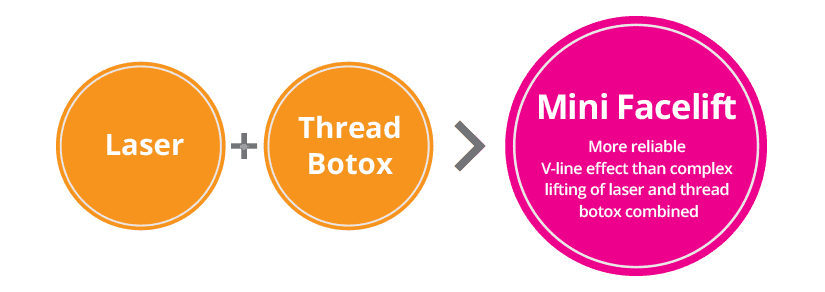
A common question from overseas patients is, "Why not just do threads, filler, or an energy device instead of surgery?" These are genuinely different categories that solve different problems. A volume mini facelift physically repositions sagging tissue and replaces lost volume; the non-surgical options work on the surface or stimulate the skin without removing or repositioning tissue. The table below lays out the category distinctions.
| Volume Mini Facelift | Thread Lift | Dermal Filler | Ultherapy / Thermage | |
|---|---|---|---|---|
| How it works | Surgically repositions skin, fat and muscle along the jawline, plus fat grafting to the midface | Dissolvable or barbed threads placed under the skin to suspend tissue | Gel injected to add volume and soften folds | Focused ultrasound (HIFU) or radiofrequency energy to stimulate collagen and tighten |
| How long it lasts | Longer-lasting than threads or filler; addresses the underlying descent and deflation rather than masking them | Temporary; threads gradually dissolve or lose their hold | Temporary; the product is metabolized over time | Temporary tightening; maintenance sessions are typical |
| Invasiveness | Surgical, with incisions along the ear and hairline | Minimally invasive, in-office | Non-surgical injection | Non-surgical, no incisions |
| Best for | Mild to moderate jowl sagging plus midface volume loss in one procedure | Early, mild laxity or a subtle "tweak" between bigger interventions | Volume loss alone, with no real sagging | Skin tightening in patients not yet ready for surgery |
If your main concern is genuine sagging combined with a deflated midface, surgery is usually the more durable answer — the non-surgical options can delay, complement, or maintain a result, but they do not lift and refill tissue the way a mini facelift does. We cover thread lifts and energy-based tightening (Thermage and Ultherapy-type devices) in dedicated step-down guides for patients who are not yet surgical candidates.
Understanding Your Fat Graft: How Volume Settles Over Time
The "volume" half of this procedure relies on transferring your own fat into the midface, and it helps to understand how grafted fat behaves. Transplanted fat is not a fixed implant — it is living tissue that needs to establish a new blood supply in its new home. In the weeks after surgery, a portion of the grafted fat integrates and becomes lasting, while some is naturally reabsorbed by the body. This is normal and expected, not a complication.
Because of this settling process, the face you see immediately after surgery is not your final result. Early on you may look fuller than intended, since swelling and the freshly placed graft both add volume. As swelling resolves and the graft stabilizes, your contour gradually refines. As noted in the recovery timeline above, the final result typically settles over roughly 3 to 6 months.
A few practical implications for international patients:
- Don't judge your result on the plane home. What you see at two weeks is still an interim stage.
- The surviving fat is durable. Once integrated, grafted fat tends to behave like the rest of your facial fat over the long term — which is why it can outlast filler.
- Ask your surgeon about their approach. How much grafted fat survives varies by patient and technique. Rather than relying on a quoted figure, ask your surgeon how they manage graft survival and whether a minor touch-up is ever part of their plan.
Candidacy by Age: Who Suits a Volume Mini Facelift
Aging is not a single event, and the right procedure depends as much on how your face is changing as on your age. The following is a general framework, not a rule — your in-person assessment is what matters.
Late 30s to mid-40s
Many patients here have early jowl softening and the first signs of midface deflation, but skin elasticity is still relatively good. This is often an ideal window, because a conservative lift plus fat grafting can restore freshness without an aggressive intervention. Patients in this group sometimes arrive having "outgrown" filler or threads and wanting something more lasting.
Late 40s to 50s
This is the core demographic for the procedure. Sagging and volume loss are usually both clearly present, and addressing descent and deflation together in one operation tends to produce the most natural result. Treating only one of the two problems can look incomplete.
60s and beyond — when a full facelift may be more appropriate
When skin laxity and sagging are advanced, a mini lift may not provide enough correction on its own. In these cases a more comprehensive lift — addressing deeper layers and the neck — is often the better long-term choice, even though it involves more recovery. If your sagging is significant, it is worth understanding the full facelift procedure before deciding; doing the right operation once beats under-treating and needing a revision.
Lower-face balance also matters: a weak or receding chin can make jowls and a soft jawline look more pronounced regardless of age, which is why some patients consider their lower-face profile and chin as part of the same plan.
Recovery and Discomfort: An Honest Look
The recovery timeline earlier covers when milestones happen; this section covers how it feels, because honest expectations make for calmer recoveries.
Most patients describe the discomfort as manageable tightness and pressure rather than sharp pain — a snug, swollen face more than an acutely painful one. Prescribed medication generally keeps soreness well controlled in the first few days. Because fat is harvested from a donor area (often the abdomen or thighs), you may also notice mild bruising or tenderness there, similar to a minor liposuction.
What to realistically expect:
- Days 1–3: Swelling and bruising peak; rest, keep your head elevated, and use cold compresses as directed.
- Days 4–7: The tight, swollen feeling eases enough for gentle walking around Seoul; bruising starts to fade or can be covered.
- Week 2–3: Most visible swelling resolves, though subtle puffiness and numbness near the incisions can linger.
- Beyond: Tightness and numbness settle gradually as the graft integrates and tissues relax into position.
Temporary numbness, firmness, or a slightly uneven feeling between sides is common in early healing and usually evens out. Individual recovery varies, so follow your surgeon's specific aftercare instructions over any general guide — and tell your care team about anything that feels wrong rather than waiting.
More than recovery routine, the single biggest factor in a natural result is who actually performs your surgery. Before you commit, confirm your operating surgeon's credentials and that the same surgeon will operate — our guide to safe plastic surgery in Korea walks through how to verify this and avoid ghost surgery.
A note on scope: This guide covers the volume mini facelift procedure itself — the technique, candidacy, fat grafting, and recovery. How many days to stay in Korea and when it is safe to fly home after facial surgery is covered in our separate, dedicated recovery-stay guide.
Look for a board-certified facial plastic surgeon verifiable through a professional body such as the Korean Society of Plastic and Reconstructive Surgeons (KSPRS), operating in an accredited Gangnam clinic.
Seoul Medical Insider works with accredited, government-registered partner clinics in Seoul — including NANA, Wonjin, Banobagi, and DA Plastic Surgery — and matches you to the right specialist for your case.
Medical disclaimer: This article is for general educational purposes only and does not constitute medical advice. It is not a substitute for an in-person evaluation and consultation with a qualified, board-certified surgeon, who can assess your individual anatomy, health history, and goals. Individual results, candidacy, and recovery vary.
Seoul Medical Insider is a government-registered medical tourism facilitator, not a medical provider or clinic. We coordinate care with credentialed Korean facial plastic surgery specialists, but we do not perform procedures or render medical opinions. Always confirm any treatment decision with a board-certified surgeon.
We are a Ministry of Health and Welfare–registered medical tourism agency in Seoul, South Korea. We are not a clinic; we partner exclusively with Korea's most credentialed facial plastic surgery specialists to ensure every international patient receives world-class care, transparent pricing, and full English-language support from your first inquiry to your final follow-up.
Clinical details are summarized from materials provided by SMI's partner clinics and published guidance from the Korean Society of Plastic and Reconstructive Surgeons (KSPRS). Technique selection is determined by your surgeon during consultation. SMI is a registered patient-facilitation agency, not a medical provider, and does not offer medical advice.
Related procedure guide See the full Volume Mini Facelift guideFrequently asked questions
Sources
- Ministry of Health and Welfare, Republic of Korea
- Medical Korea (KHIDI)
- Korea Health Industry Development Institute (KHIDI)
- Korean Society of Plastic and Reconstructive Surgeons (KSPRS)
Read our editorial policy to learn how we source and verify information.
